


A Tech Co-Founder or CTO isn’t just a fancy title—it’s the difference between building a rocket ship and duct-taping a paper plane. A tech co-founder or a CTO is the person who turns ambitious ideas into scalable, working software products, ensuring your tech doesn’t crumble the moment real users show up. While you’re out pitching investors and refining your vision, they’re making sure the app doesn’t crash mid-demo.
But do you really need one? Not every startup does. Some get by with outsourced developers, fractional CTOs, or even non-tech founders who’ve learned just enough to keep things running. The real question is: Can your startup afford not to have technical leadership?
Before you decide whether to bring in a tech co-founder, hire a CTO, or go solo, let’s break down exactly what they bring to the table–and whether skipping one is a risk worth taking.
What is a Tech Co-Founder?
A tech co-founder is the driving force behind the technical side of your startup, turning your vision into a functional, scalable product. While you handle the vision, business strategy, and possibly the funding, they build the actual product, manage the development team, and make sure your grand idea doesn’t crash and burn because of poor code.
Think of them as the Tony Stark to your Steve Jobs–someone who takes the big ideas and makes them work in the real world (preferably without blowing up a server). They don’t just write code; they shape the technical direction, decide on the tech stack, ensure that your startup doesn’t get stuck in development purgatory, and your initial tech infrastructure cost doesn’t get blown out of proportion.
Without a tech co-founder, you’ll find yourself outsourcing everything, which is fine–until you need urgent fixes, product iterations, or someone who understands both your business goals and the technical feasibility of your vision. In short, a tech co-founder isn’t just a coder; they’re the backbone of your startup’s technical execution and long-term scalability.
Difference Between a Tech Co-Founder and a Non-Tech Co-Founder
A tech co-founder is the architect of your startup’s technology. They build the product, make critical tech decisions, ensure cost control and scalability. They speak the language of developers and can navigate the tech landscape. A non-tech co-founder, on the other hand, focuses on business strategy, sales, marketing, and operations. While both drive the startup forward, the tech co-founder handles “how it works,” while the non-tech co-founder focuses on “how we grow.”
What is a CTO (Chief Technology Officer)?
A Chief Technology Officer (CTO) is the person who makes sure your startup’s technology doesn’t turn into an expensive pile of spaghetti code. They aren’t just the lead developer—they’re the architect, strategists, and tech visionaries who ensure that your product isn’t just functional but scalable, secure, and innovative.
While a tech co-founder is often hands-on with coding in the early days, a CTO’s role evolves as the company grows. They oversee the tech team, define the roadmap, enhance the tech team capability, and align technology with business goals. In short, a CTO is the bridge between your startup’s vision and the tech that powers it. They ensure that technology isn’t just a tool but a driving force behind your company’s success.
The Evolution of the CTO Role in a Growing Startup
A startup’s CTO isn’t a static job because it evolves as your company scales. At each stage, their focus shifts from pure coding to leadership, strategy, and innovation. Here’s how it plays out:
Early-Stage: The Hands-On Product Manager, Coder and Architect
In the early days, the CTO is deep in the trenches, writing code, debugging at 2 AM, and making coffee-fueled decisions about the tech stack. They’re the go-to person for every technical problem and the builder, laying the foundation for the product to ensure it’s functional and scalable.
Growth Stage: Team Builder and Strategic Planner
As the startup gains traction, the CTO transitions from coding wizard to team leader. They start hiring developers, mentoring junior engineers, and defining the tech roadmap. The focus shifts from “How do I build this?” to “How do I scale this without everything breaking?” Process automation, security, and technical debt management become priorities.
Mature-Stage: Tech Visionary and Innovation Leader
At this point, the CTO is no longer writing code (at least not daily). Instead, they manage large teams, set long-term technology strategies, and ensure the company stays ahead of industry trends. They also work closely with other executives to drive business growth through innovation.

Do You Really Need a Tech Co-Founder or CTO for Your Startup?
Not every startup needs a tech co-founder or a CTO from day one. Some can get by with outsourcing or hiring technical talent as needed. But having strong technical leadership can be the difference between scaling successfully and sinking under a pile of broken code if your business is built on technology.
Does Every Startup Need a Tech Co-Founder or CTO?
You don’t need a full-time tech leader if your startup is, say, a marketing agency or a local coffee subscription service. Many businesses can operate just fine using existing platforms and outsourced developers.
But suppose your startup revolves around a tech product, an AI-powered solution, a complex data-driven platform, or anything remotely technical. In that case, you need someone who understands tech at a strategic level. Founders without technical expertise often underestimate just how complex things can get, and that’s when startups crash and burn.
Signs That Your Startup Would Benefit from Technical Leadership
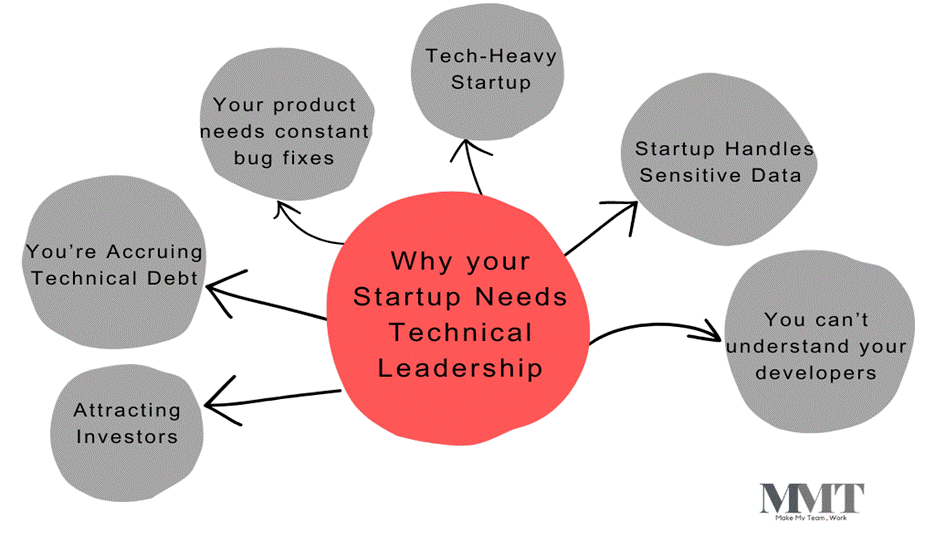
Do you need a tech co-founder or CTO? Here are some red flags that say, “Yes, you do”:
- Your startup is tech-heavy – You need someone who can architect, build, and scale your product if your business relies on proprietary software, a complex platform, or data-driven solutions.
- You struggle to communicate with developers – Constantly misinterpreting what your developers are saying is a sign you need a technical leader who speaks their language.
- Tech debt is creeping in – Without proper oversight, quick-and-dirty development leads to a messy codebase that slows you down. A CTO ensures you’re building for the long term.
- Security and compliance are major concerns – A tech leader is critical to managing risks if your business handles sensitive user data or needs to comply with regulations.
- Your product keeps breaking – You know it’s time to bring in someone who can establish solid tech foundations if you’re constantly fixing bugs and firefighting outages.
- You want to attract investors – Serious investors want to see a strong founding team. Expect some raised eyebrows if your startup is tech-driven and you have no tech leadership.
Many early-stage startups start by outsourcing development to agencies or freelancers. This can be a cost-effective way to build a minimum viable product (MVP). However, as our startup grows, you’ll need a dedicated tech leader who understands both the technical and business aspects of your company.
How to Decide Between Hiring a CTO or Finding a Tech Co-Founder
At some point, every startup with a tech-driven product faces a crucial decision: do you bring in a tech co-founder who’s in it for the long haul, or do you hire a CTO to lead your technical efforts as a salaried employee? The right choice depends on your startup’s stage, product complexity, and budget. Let us discuss some key factors to consider:
Startup Stage:
Idea & MVP Stage: A tech co-founder is often the best choice if you’re just starting out and need someone to turn your concept into a working product. They’ll be fully invested in the vision, ready to build alongside you, and willing to work for equity.
Scaling Stage: Once you have traction, a CTO might be a better fit to refine, scale, and manage a growing tech team. At this point, you need structured leadership, not just a coding powerhouse.
Product Complexity:
Having a tech co-founder with deep technical expertise is invaluable if your startup revolves around deep tech (AI, blockchain, cybersecurity, or complex software solutions).
You’ll be fine outsourcing development early on and hiring a CTO later for oversight if your tech needs are more straightforward (e.g., an e-commerce site or SaaS with standard features).
Budget & Compensation:
Tech Co-Founders: Typically work for equity, taking little to no salary in the early stages. They’re betting on the startup’s future success.
CTOs: Usually salaried employees with potential stock options or bonuses. Hiring a CTO makes sense if you have funding and need an experienced leader rather than a hands-on builder.
Find a tech co-founder if you’re still testing your idea and need someone willing to take a risk with you. Hire a CTO if you already have funding and a product but need strong technical leadership.
What Qualities Should You Look for in a Tech Co-Founder or CTO?
Finding the right tech co-founder or CTO isn’t just about technical skills—it’s about leadership, adaptability, and vision. You need someone who can not only build but also scale, manage, and future-proof your startup’s tech.
- Technical Expertise (But the Right Kind): A tech co-founder or CTO should be an expert in the technologies that align with your product’s needs. For example, a Python guru with AI experience is gold if you’re building a machine-learning startup. On the other hand, look for experience in full-stack development, mobile, or web technologies if you’re launching a consumer app.
- Problem-Solving Mindset: Startups are chaotic. Things break, deadlines shift, and customers demand impossible features. A great CTO or co-founder thrives under pressure and finds creative, scalable solutions rather than quick fixes.
- Leadership & Team Management Skills: As your startup grows, your tech leader needs to transition from coding to managing a development team. Look for someone who has experience hiring, mentoring, and retaining top engineers.
- Vision & Strategic Thinking: Your tech leader isn’t just a coder—they should understand business goals and align technology decisions with growth. Can they balance speed vs. scalability? Do they make decisions based on long-term impact rather than short-term wins?
- Communication Skills: Can they explain complex tech concepts to non-technical people (investors, customers, or you)? Do they listen and collaborate rather than insisting on their way?
- Commitment & Cultural Fit: A tech co-founder should be just as invested in the startup’s success as you are. A CTO should align with the company’s vision, culture, and long-term plans.
- Business Acumen & Adaptability: Can they adapt to changing priorities as the startup pivots? Do they understand fundraising, budgeting, and the economics of building tech efficiently?
Choosing the right tech co-founder or CTO is about finding a partner who can turn your vision into reality, navigate the chaos of startup life, and build something that lasts. The right person will shape the future of your company. Therefore, it’s important to choose wisely because your startup’s success depends on it.
What to Expect from a Tech Co-Founder or CTO at Different Startup Stages
The role of a tech co-founder or CTO evolves dramatically as your startup grows. In the early days, they’re the hands-on coder and problem-solver, but as the company scales, their focus shifts toward leadership, strategy, and innovation. Here’s what to expect at each stage:
1. Early-Stage Startups: Ideation and MVP
At this stage, your tech co-founder or CTO is deep in the trenches—brainstorming ideas, writing the first lines of code, and building the Minimum Viable Product (MVP). They’re working with minimal resources, experimenting with tech stacks, and validating the core technology to ensure your startup has a solid foundation. This is a roll-up-your-sleeves, wear-multiple-hats phase where agility matters more than perfection.
2. Growth-Stage Startups: Scaling and Technology Management
Once your startup gains traction, it’s time to scale. A CTO at this stage transitions from coding to team-building and tech strategy. They’re focused on hiring developers, improving product architecture, and ensuring your systems can handle growth. They also introduce structured workflows, security measures, and automation to prevent your tech from turning into an unmanageable mess as the user base expands.
3. Mature Startups: Managing Larger Teams and Tech Infrastructure
When your startup reaches a more established stage, the CTO’s role becomes less about day-to-day development and more about leadership and innovation. They’re managing multiple engineering teams, overseeing infrastructure security and stability, and aligning technology with long-term business goals.
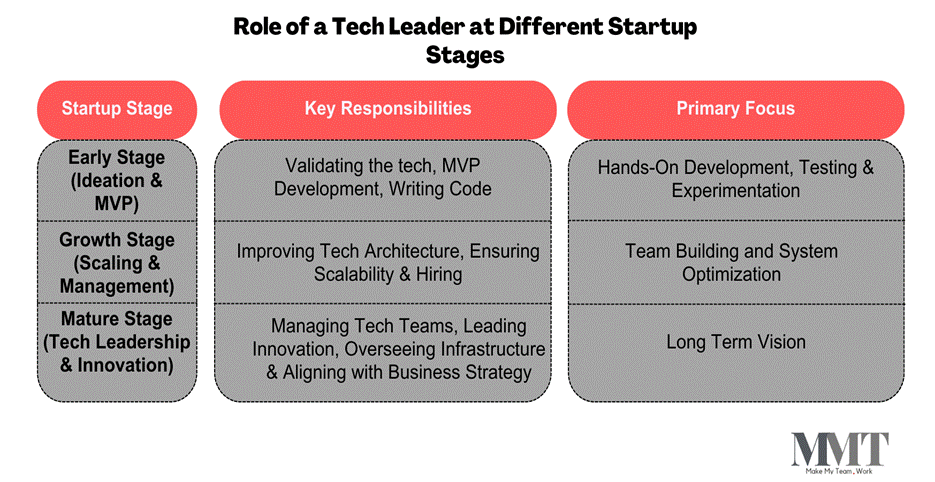
A great tech leader drives your startup’s growth. Whether they’re coding in the early days, building a rockstar tech team during scaling, or steering the company’s tech vision in the later stages, their role evolves with the business. The key is knowing what to expect and making sure they’re the right fit for each phase of the journey.
What are the Alternatives to Having a Tech Co-Founder or CTO?
Alternative solutions that provide the expertise you need without the long-term commitment exist if bringing on a permanent tech leader isn’t feasible. They include:
Fractional CTOs and Freelance CTOs:
Not every startup needs a full-time tech leader from day one. Fractional CTOs and freelance CTOs offer a flexible solution, providing strategic technical oversight on a part-time or contract basis. This is ideal for early-stage startups that need guidance but aren’t ready for a full-time hire. They help set up the tech foundation, hire developers, and create a long-term roadmap—without the commitment of a co-founder or executive salary.
Tech Agencies and Outsourcing Options:
Outsourcing is a smart option if your startup needs technical expertise but doesn’t have the resources to build an in-house team. Tech agencies and development firms can handle everything from MVP development to scaling a product. This allows startups to access high-quality engineering talent without the overhead of hiring full-time employees. However, outsourcing requires strong project management to ensure alignment with your vision.
Choosing an alternative to a full-time tech leader doesn’t mean compromising on quality because there is no one-size-fits-all solution for startups. It’s about finding the right fit for your startup’s stage and needs. The key is to ensure that whoever you bring in, whether a fractional CTO or an outsourced team, aligns with your vision.
What Happens if You Don’t Have a Tech Co-Founder or CTO?
Skipping out on a Tech Co-Founder or CTO seems like a way to save money or keep things simple, but it can quickly turn into a game of tech Jenga–one wrong move, and everything starts collapsing. Without a dedicated tech leader, your startup might struggle with direction, scalability, and investor confidence. Here’s what can happen when no one is steering the technical ship:
- Technical Debt Piles Up – Without a strong technical foundation, your startup could end up with messy code, security vulnerabilities, and scalability issues.
- Product Development Moves Slower – Without someone guiding the tech strategy, decision-making can get delayed, and your outsourced team lacks direction.
- Higher Long-Term Costs – Relying on external developers without in-house technical oversight can lead to expensive fixes down the road.
- Investor Confidence Drops – Investors love to see strong leadership, especially in tech-driven startups. They can perceive the lack of a tech lead as a red flag.
- You Become the Accidental CTO – Guess who’s stuck making tech decisions if no one else is handling tech? Yep, you–even if you don’t have a tech background.
While plenty of startups survive without a Tech Co-Founder or CTO, they often pay the price in delays, inefficiencies, and technical headaches. You’ll need a solid plan to fill that gap if you don’t have a tech lead because, in the startup world, “winging it” isn’t a great long-term strategy.
Can a Non-Tech Founder Learn Enough to Manage Without a Tech Co-Founder or CTO?
A non-tech founder can learn just enough to survive—understanding the basics of coding, software development cycles, and technical decision-making can help bridge the gap. You don’t need to become a full-stack developer overnight, but grasping tech fundamentals allows you to communicate effectively with engineers, vet potential hires, and avoid getting blindsided by technical challenges. Realistically, you will not replace a tech lead or a CTO, but a solid tech foundation can keep your startup from veering off course.










[…] likely need someone who can lead product development, such as a tech co-founder or CTO who understands coding, systems, and all things technical. On the business side, a co-founder with […]