
It is essential to understand the process of building a Minimum Viable Product (MVP) from ideation to launch before you actually start building your product. The ideation-to-launch process helps you transform your product from an idea to something ready for the market. Your MVP delivers a unique value proposition to early adopters.
They can either experience something completely new and unavailable elsewhere or get a significantly better value than what existing products offer. Your product will undergo many iterations between ideation and launch before its early adopters start realizing value from it.
What is an MVP?
MVP is among the many startup words you will encounter. It is a pilot version of your product that undergoes testing and iterative development while molding it gradually into the full version to meet user needs. It is essentially the first version that enables you as a founder to understand:
- The demand for your product in the market.
- How many customers are willing to pay for your product.
- What it will take to build a successful business.
- If the entrepreneurial path is for you or not (if not, that’s perfectly fine).
An MVP allows you to test the waters and determine whether your idea is viable in the market.
Building an MVP from Ideation to Launch
Ideation and Conceptualization
Developing an MVP begins with ideation. Brainstorming will help you find ideas, develop concepts, conduct research on them, and convert them into an idea.
Techniques for brainstorming and validating ideas
You and your cofounders can use various brainstorming techniques:
- Suggesting ideas unfiltered.
- Mind mapping by visualizing your concepts through a clear organization of your thoughts and ideas.
- Observe problems around you, at work, or in your personal life, and conduct further research to determine whether other people experience the same problem.
- Look for opportunities resulting from changes in government policies, changes in societies or cultures. Subsequently, you should conduct further research to determine whether an opportunity exists and how it will change consumer demand or behavior.
- Research to find good ideas and identify existing gaps in the market.
Research helps you find a good idea from the unfiltered ones.
Defining the Problem and Solution
You should then define the problem you aim to solve with your product idea. Defining the problem helps identify which pain points you will solve with your idea.
How to articulate the problem your MVP will solve and the proposed solution
You should have a clear and well-defined problem your MVP will solve. For example, Uber’s founders defined the problem as the inability to hail a cab from any location. You should then create a list of possible solutions to the problem you identified.
Market Research
Next, you should conduct extensive market research specially focusing on topics related to your product idea. It helps you understand the scope of the existing market and how you can elevate your idea to offer customer value. Market research also helps you develop feasible solutions to the problem you defined.
Importance of understanding your market and competition
It is essential to understand what your competitors are doing despite having a good idea. Understanding your competitors helps you identify gaps you can fill and increase the value of the product you offer to your consumers.

Image by Fauxels via Pexels
Planning and Strategy
Setting Clear Objectives
You will identify and set clear objectives for what you want your MVP to achieve. These objectives need to be well-defined, reasonable, and achievable for your startup.
Defining what success looks like for your MVP
You will also need a clear vision of what the success of your MVP looks like. For example, gaining 500 subscribers from early-adopters can be an indication of success for your MVP.
Budgeting and Resource Allocation
Many startups face financial constraints. It is important to have a feasible budget for your MVP so you don’t exert your startup and fail to meet your objectives. Some projects stall due to a lack of proper resource allocation for every segment detrimental to the success of your MVP.
How to budget and allocate resources effectively
Proper resource allocation involves identifying which areas of your project require the most funding and which ones can succeed with limited funds. When working on an MVP, you need to use the least possible funds because you will still need to make iterations along the way.
Design and Prototyping
User Flow and Experience Design
User interface (UI) and user experience (UX) are essential aspects of your MVP. Your team should map out a design that makes it easy for users to navigate the product –an app, website, or any software you are building.
Mapping out user flow and designing for optimal user experience
Your MVP should be simple and easy to use for users. Users should not experience difficulties when interacting with your product. For example, on a website you should have all actionable buttons in a location easily visible to your users.
Prototyping
Your prototype should always target simplicity. Your prototype should be actionable and achieve users’ goals easily.
Creating low-fidelity prototypes to visualize the MVP
MVPs use the minimum possible resources and features. The same case should apply to prototypes. You should develop simple, low-cost prototypes to map out the design of your MVPs. Low-fidelity prototypes are used in the early development stages of your MVP and should not consume many resources since you will drop many of them.
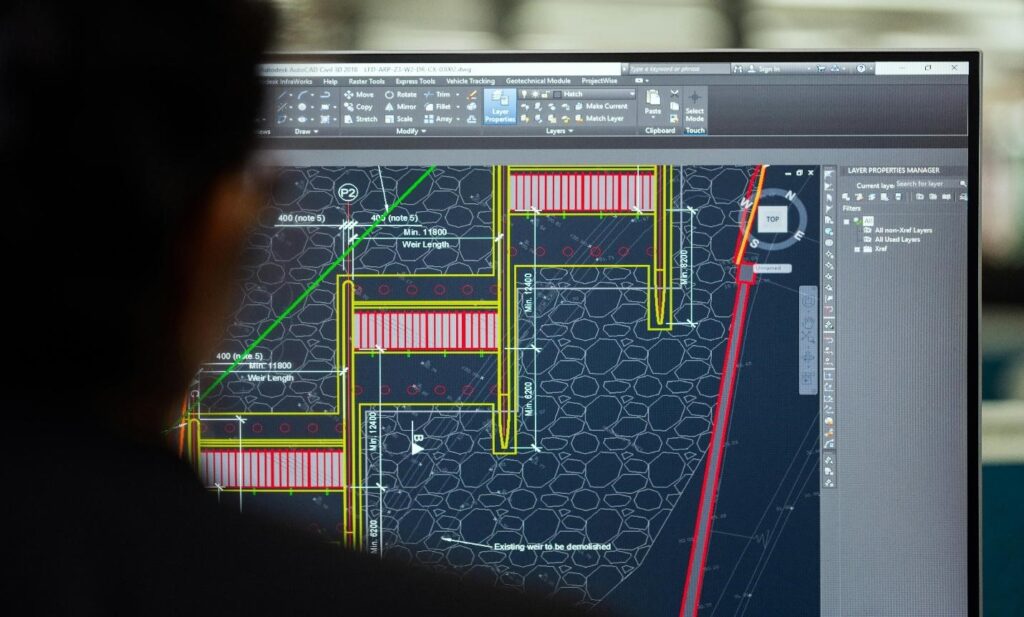
Image by This is Engineering via Pixabay
Development
Selecting the Right Technology
Developers are the most crucial part of your MVP at this stage. You should with your developers to choose technologies best suitable to achieve your MVP’s needs.
Feature Prioritization
MVPs only need usable features. You need to identify which features are most crucial to make your product usable to early-adopters.
Implementing agile methodologies for iterative development and continuous improvement
Iterative development is common in the development of MVPs. Your development team will drop or add features to your MVP depending on early-adopter feedback.
During development, some features mapped out in the design stage can prove challenging to incorporate. Your team will continuously iterat to come up with something that works seamlessly.
Testing and Refinement
User Testing
User testing involves releasing the product to a very small group to determine whether it is functional. In a practical example, Uber’s testing stage included sending a link to download the app only to people who emailed the founder, Kalanick.
Conducting user testing to gather feedback and refine the MVP
You will gather feedback from your early adopters to improve the functionality and usability of your MVP. You can gather feedback through Q&A processes that allow users to indicate which aspects of your project they recommend improvements on. You can also allow users to review your product and identify the most common complaints to refine it.
Quality Assurance
You should test whether the product works seamlessly before releasing a new version that has integrated iterations.
Launch
What does launching an MVP mean?
This is the stage where you release your MVP to your early adopters.
Steps to prepare for the MVP launch, including final bug fixes and preparing marketing materials
Despite getting this far, you should not release your product blindly. For instance, you need to have a marketing strategy –that also utilizes resources –to reach your target audience. You should also run tests on your product to identify any bugs, such as system lags to ensure your MVP runs efficiently.
Soft Launch Strategies
Soft launching will save you because if the product rapidly reaches many people and has issues, it will have immense negative feedback, which can influence its future success. You can release the product to a few users first and incorporate their feedback before enhancing your clientele reach. This strategy will ensure that more users receive a better version of your product and mitigate the risk of early abandonment from a larger crowd.
How long does it take to launch an MVP?
An MVP takes around three to four months to launch.
What are the benefits of launching an MVP?
- Early users will notice some bugs, requiring your team to fix them and make the product more attractive as more people start to use it.
- Launching an MVP is essential in validating your idea, receiving feedback from early adopters, and ensuring your iterations are well-informed.

Image by Wiki Images via Pixabay
Post-Launch and Iteration
What happens after MVP launch?
Your journey does not end after launching your product. You need to observe how your product performs after you release it to early-adopters.
Gathering User Feedback
You have to determine if your product works and what changes you need to make. The post-launch stage is heavily dependent on how your early adopters respond to your product. You will gather and analyze their feedback to determine the areas that still need improvement to maximize customer value.
Iterative Improvement
Iterative improvement occurs at the post-launch phase. Your team will change some things and add and remove features to enhance user experience within your MVP. You will continue to observe how the market responds to your product until you reach a point where you are comfortable with scaling.
Scaling
How do I know if my MVP is successful?
Your MVP is successful if it meets your goals and objectives.
Steps to transition from MVP to a full product
- Gather and analyze user feedback and reception.
- Make iterations.
- If more people continue adopting your product after iterations, you can add other features and fully develop it.
- Run tests, remove bugs and ensure your MVP can handle scalability.
Strategies for scaling the product and expanding market reach
Once your MVP has a positive market reception post-launch, you can observe its performance for some time and the proceed to scale. Scaling includes widening your target audience. For instance, Uber only served limousine drivers but eventually scaled to other cab drivers. Scaling can include increasing your budget, looking for investors, and adding more workable features to develop your MVP into a full product.
What are the three steps to use the MVP technique?
- Identifying your MVP’s value proposition.
- Identifying the hypotheses you need to validate.
- Identifying how to validate your idea in a short time.
What is the best approach to building an MVP?
The best approach to building an MVP is identifying the most important features that address pain points for your consumers. Your product just needs to be usable. You don’t need to include everything in your MVP. You will do this when scaling.
What is MVP workflow?
A rapid and agile concept involved building MVPs. It is based on the idea that you can validate your product quickly, determine areas of improvement and iterate just as fast.
What is MVP seed stage?
It is an early stage that happens after launching your MVP. It uses the minimum possible resources and costs and its primary aim is to ensure a product-market fit.
What is the MVP process in agile?
The process of building an MVP using a software development methodology that uses scrum and sprint-based development to ensure continuous team collaboration and iterative development.
How to write an MVP document?
Ensure that you analyze all that is required in MVP development, for example, structure and features for functionality, which are then incorporated in your MVP document.







[…] managing code and project management. In 2001, Mike Cannon-Brookes, seeking a partner to build a tech startup, reached out to his classmates in Sydney. Scott Farquhar was the only one who responded and shared […]
[…] consume fewer resources. This is where they come in. They take less time and investment compared to developing a full-fledged product. They also enable iteration based on the feedback received, thus making it the most advisable […]
[…] at mobile app developers‘ portfolioe before hiring them to build your product is essential. A portfolio showcases a developer’s previous projects and allows you to gauge their […]
[…] at mobile app developers in Melbourne’s portfolio before hiring them to build your product is essential. A portfolio showcases a developer’s previous projects and allows you to gauge their […]