


Launching a technology-based startup isn’t just about coding or developing the next big thing—it’s about transforming the identified problem into a solution people need. Launching a technology-driven startup involves a mix of creativity, strategy, and adaptability as you take your vision from paper to product.
The initial 3 to 9 months of starting a tech business are undeniably exciting—there’s a thrill in turning your vision into something real. But that excitement can sometimes overshadow the amount of work, dedication, and strategic planning needed to launch a viable, successful company. It’s not just about having a great idea; it’s about making sure every piece of the puzzle falls into place. Getting it right takes more than passion—it takes a solid game plan and the determination to follow through.
What is a Technology-Based Startup?
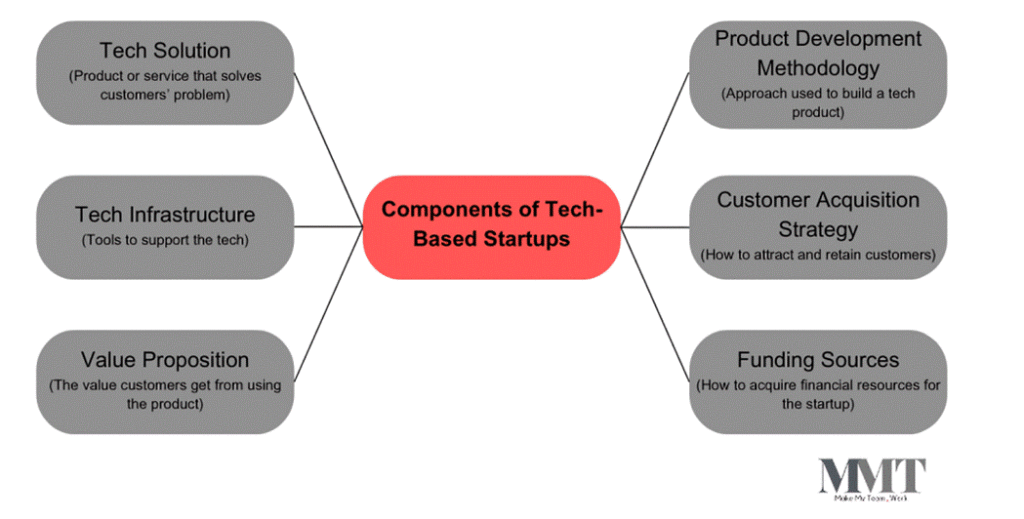
Unlike conventional startups, which primarily focus on services or consumer goods, a technological startup builds its foundation on a technological breakthrough or innovation. The distinguishing feature of these startups is that technology often forms the business models as the backbone. They consist of the following:
- A Technological Solution: The product or service that your tech startup offers to solve a specific problem or meet a need in the market. It’s the heart of your business—what makes your company stand out. it must address a real challenge your target audience faces, and it should do so in a way that’s innovative, efficient, and easy to use.
- Technological Infrastructure: The foundational systems and tools that support the technology in your startup. Infrastructure includes everything from servers, cloud services, and databases to the networks and software that help your product or service run smoothly. It is the setup that ensures your technology operates efficiently, securely, and at scale.
- Value Proposition: This is a clear statement that explains why customers should choose your product over others. It answers the question: “What problem are you solving, and how are you doing it better or differently?” Your value proposition should highlight the unique benefits your technology offers and demonstrate the real value your solution brings to your target audience and why they can’t afford to overlook it. It is also what makes your tech startup stand out from the competition.
- Product Development Methodology: The approach you use to design, build, and improve your tech product. It defines your team’s processes and stages to take an idea from concept to launch. Common methodologies include Agile, Waterfall, and Lean, each with its own set of principles and practices. The choice of methodology affects how quickly you can adapt to changes, deliver features, and respond to market needs.
- Customer Acquisition Strategy: Focuses on how you plan to attract and retain customers for your product or service. It includes everything from your marketing tactics, sales processes, and customer support to how you engage with potential users to build long-term relationships. A well-thought-out customer acquisition strategy helps you understand where to find your target audience, what messages resonate with them, and how to convert them into paying customers.
- Funding Sources: These are the financial resources you tap into to support and grow your tech startup. They can include a mix of personal savings, loans, angel investors, venture capital, crowdfunding, or grants. The right funding source depends on your startup’s stage, your growth plans, and the amount of control you want to retain. Having a clear strategy for securing funding is crucial, as it ensures you have the capital needed to develop your product and scale your business.
Technology-based startups are at the forefront of driving innovation, introducing cutting-edge products and solutions that often redefine market landscapes. These companies harness emerging technologies to create novel offerings that solve real-world problems more efficiently.
What Are the Steps to Develop a Business Plan for a Tech Startup?
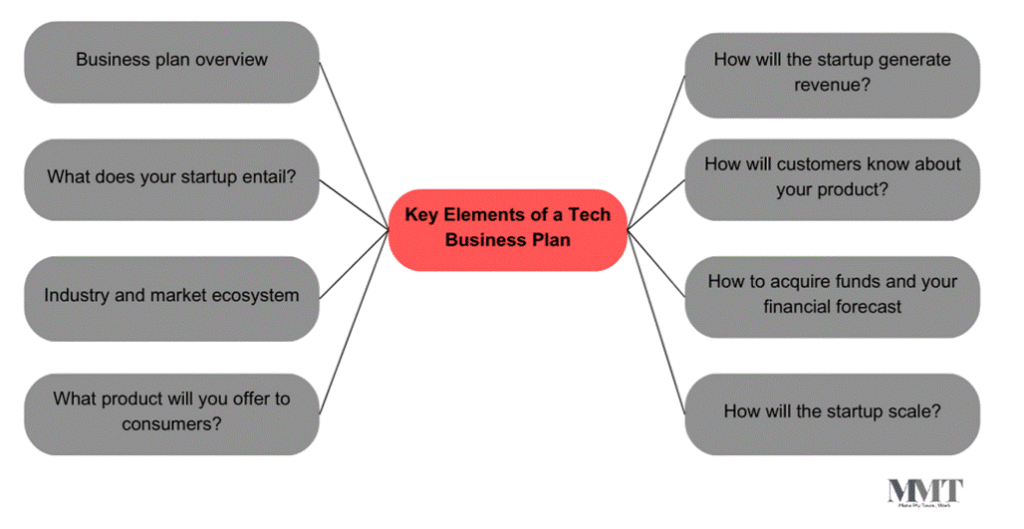
Creating a business plan for a tech startup is a bit different from other types of startups, like retail, because it needs to address both the technical and business aspects. For a tech startup, your plan should cover everything from the technology behind your product to how you’ll bring it to market and grow the business. When developing your business plan, make sure to include these key elements:
- An Executive Summary: An overview of the entire plan that gives readers–e.g., stakeholders and investors–a brief idea of what your business plan entails. This segment also integrates the mission and vision of the startup. A summary is usually written last after completing all the other segments.
- Give a Description of your Startup: A detailed explanation of what the startup entails, including the business model, positioning, industry context, target market, and entity type (e.g., corporation, sole proprietorship, etc.)
- Conduct a Market Analysis: A detailed breakdown of the business’s landscape that provides insights into the market environment and helps demonstrate a clear demand for your product or service. A well-researched market analysis shows potential investors, partners, and stakeholders that your business is positioned to succeed and can effectively compete within its industry.
- Describe your Offering: A comprehensive overview of the solution your company is offering, i.e., the tech product you aim to offer to consumers so you can generate revenue.
- Include a Monetization Strategy: A detailed description of how the startup will generate revenue, such as using subscription models or one-time sales.
- Describe your Marketing Strategy: A breakdown of the efforts and tactics you’ll use to create awareness of your tech product and reach, attract, and retain your target consumers.
- Detail your Financial Plan: It details how your company will manage its finances, generate revenue, and ensure profitability. For tech startups, the financial plan also includes a strategy for how funds will be acquired in the seed stages, e.g., from venture capital, angel investors, or whether the company will bootstrap.
- Incorporate a Growth Strategy: A description of how the company will scale its operations, expand its market share, and expand its customer base over time. Tech startups also include an exit strategy, either by selling (through a merger and acquisition) or by taking it public through an Initial Public Offering (IPO).
A solid business plan is one that’s backed by research and real data that support your idea. It’s not just about having a great concept but proving that it can work in the real world. When you combine this strong foundation with innovation, you’re setting your business up for long-term success. A well-researched plan shows potential investors and partners that you’ve thought things through and are prepared for the challenges ahead.
How to Assemble a Founding Team for a Tech Startup?
Building a strong founding team is one of the most critical steps in launching a tech startup. Sure, you have the idea, the vision, and the passion, but without the right people by your side, even the best concepts can fall flat. Your founding team doesn’t just need to be skilled—it has to complement each other’s strengths, fill in gaps, and be ready to face the tough challenges that come with starting something from scratch. So, how do you assemble the dream team to help turn your tech idea into a thriving business?
- Define Key Roles and Responsibilities: Before you start gathering people for your founding team, it’s crucial to define the key roles and responsibilities each member will take on. A tech startup needs a solid foundation, so figure out who will handle the tech side, the business side, and everything in between.
You’ll likely need someone who can lead product development, such as a tech co-founder or CTO who understands coding, systems, and all things technical. On the business side, a co-founder with experience in strategy, operations, or fundraising is invaluable—think CEO or COO. You may also need a marketer to promote the product, a designer to handle the user experience, and maybe even a financial expert to manage the books. The important part is clarifying what each person is expected to do so everyone can focus on their strengths and keep the startup moving forward.
- Seek Passionate and Committed Co-Founders: When you’re assembling your founding team, passion and commitment are non-negotiables. Building a startup isn’t a 9-to-5 job—it’s a rollercoaster of challenges, late nights, and constant problem-solving. You need co-founders who are genuinely excited about your idea and willing to work hard, even when things get tough. They should be willing to go above and beyond and make sacrifices to see the startup succeed.
- Look for Team Chemistry and Compatibility: Your team can have all the right skills and expertise on paper, but the whole thing could fall apart if it doesn’t mesh well. You’ll be spending a lot of time together, making tough decisions, and facing high-pressure situations, so everyone must get along. Look for co-founders who respect each other’s opinions, have a similar work ethic, and can challenge each other constructively.
- Leverage your Networks: The startup world thrives on relationships, and you might be surprised by how many talented individuals are already within your reach. Don’t be afraid to tap into your personal and professional connections—whether it’s past colleagues, mentors, or friends of friends. Chances are, you already know people with the skills you need or can connect you with others who do.
- Conduct Thorough Interviews: Conducting thorough interviews is a must when you’re building your founding team. Don’t rush through this step—finding the right people for your startup is crucial for its success. Ask questions that go beyond just technical skills and experience. You want to understand how candidates approach problem-solving, handle stress, and deal with challenges in past projects. It’s also important to gauge their values and work style—do they share your vision? Dig into their motivations and long-term goals to ensure they’re as committed to the startup as you are.
- Assemble your Team: Once you’ve found the right people with the right skills, passion, and chemistry, it’s time to assemble your team officially. This is when everything starts to take shape, and the dream transforms into reality. Get clear on roles and responsibilities, set expectations, and make sure everyone is aligned on the startup’s vision and goals. You’ll want to ensure that communication is open and transparent from the get-go so that everyone knows where they stand and what they’re working toward. At this stage, it’s also a good idea to formalise your agreements—whether it’s equity splits, decision-making processes, or other key aspects of your collaboration.
As you assemble your founding team, keep in mind that, due to limited resources in the early startup stages, it’s important to find members who can wear multiple hats. Look for people who bring their primary expertise—whether it’s coding, design, or marketing—and have a diverse skill set that can help across different areas.
What Legal Steps Are Involved in Starting a Tech Company?
Many first-time founders underestimate the importance of setting up the right legal framework, which can lead to many problems as the startup grows. Undertaking legal precautions is crucial to protecting your company and ensuring it’s built to scale. Key legal considerations to keep in mind as you launch your startup include:
- Choose a Business Structure: This is one of the first legal steps when starting your tech company. Your choice will impact everything from your taxes to your personal liability, so it’s important to get it right. The most common structures are Sole Proprietorship, Limited Liability Company (LLC), Corporation (C Corp or S Corp), and Partnership.
- Register your Business: After deciding on your business structure, it’s time to make your startup official by filing the necessary paperwork with your state or local government. The process involves submitting specific forms, paying a fee, and providing essential details like your business name and address.
- Trademark your Product: A trademark gives you exclusive rights to use your logo, product name, or slogan, preventing others from using similar branding that could confuse customers.
- Protect your Intellectual Property (IP): This is a key step in securing your tech startup’s innovations and competitive edge. IP includes anything you create or develop with value, such as software, code, designs, or even unique business processes.
- Set up Business Contracts and Agreements: Having the right contracts and agreements in place is essential to protect your tech startup from legal issues down the road. These documents outline the roles, responsibilities, and expectations between your company and key stakeholders. Depending on the nature of your business, trade secrets—such as proprietary algorithms or customer lists—should also be safeguarded with non-disclosure agreements (NDAs) for the people you work with.
It’s essential to avoid skimping on the legal steps because they’re an investment in your company’s future. While it might seem like a lot to tackle, getting your legal foundations right can save you time, money, and headaches in the long run.
How to Launch Your Technology-Based Startup?
Starting a tech-based startup is an exhilarating yet daunting journey. You’ve got a game-changing idea, the drive to turn it into something real, and a vision of the future. The difference between success and failure often boils down to how well you execute these first crucial steps:
- Create a Pre-Launch List: A solid pre-launch list will give you the clarity and direction you need to hit the ground running when it’s time to go live. It will also help you stay organised and ensure you’re not missing any critical tasks.
- Build Buzz and Anticipation Before Launch: Start by teasing your audience early on to get your target audience eager and excited to use your product. You can engage with your audience through webinars or virtual events where you introduce your product and its benefits, which can also generate interest. The goal is to make your target audience feel like they’re part of something special so by the time you officially launch, they’re already excited and ready to get involved.
- Choose a Concise Date for the Launch: Choosing a concise launch date is crucial for creating a sense of urgency and focus. It helps you and your team stay on track and gives you a clear deadline to work toward. Pick a date that gives you enough time to complete any pre-launch tasks but also one that’s not so far away that it drags out your audience’s anticipation.
- Craft a Compelling Launch Message: Communicates what your product offers and why it matters. Your message should be short, engaging, and highlight the key benefits your tech startup provides to your target audience.
- Launch with a Strong Online Presence: Launching with a strong online presence is key to getting your tech startup noticed. In today’s digital world, your website, social media channels, and online marketing efforts will be the face of your brand.

Once you’ve launched your tech startup, the real work begins because you need to monitor how your product is performing closely. Measure, track, and analyse key metrics—everything from user engagement to conversion rates—to understand what’s working and what needs improvement.
What Are the Best Marketing Strategies for a Tech Startup?
Marketing a tech startup is like trying to stand out in a crowded room. Traditional marketing tactics do not always cut it in the fast-paced digital world. The key is finding creative strategies that grab attention and build trust with your target audience, such as:
- Leverage Content Marketing: Establishes your tech startup as an authority in your field and builds trust with your audience. Start by creating valuable, informative content that solves your target audience’s problems or answers their questions. This could be blog posts, how-to guides, case studies, white papers, or even video tutorials that demonstrate how your product works.
- Paid Advertising: This is a powerful way to boost visibility and quickly attract the right customers to your tech startup. You can leverage platforms like Google Ads, Facebook, LinkedIn, and Instagram and target specific demographics to ensure your behaviours are the people most likely to convert.
- Search Engine Optimization (SEO): This is one of the most effective long-term marketing strategies for a tech startup. By optimising your website and content to rank higher on search engine results pages, you can attract more organic traffic and boost your visibility.
- Email Marketing: This is a great way to nurture relationships with your audience and keep them engaged as your tech startup grows. Craft personalized, valuable emails that speak directly to your audience’s needs. This could be product updates, helpful tips, exclusive offers, or early access to new features.
- Influencer Marketing: A great strategy is to build your product’s credibility by using well-known public figures in your niche. You can partner with influencers who have the trust of your target audience to promote your product.
- Building Relationships and Networking: This strategy helps you connect with potential partners, customers, and industry leaders who can support your growth. Start by attending relevant industry events, conferences, and meetups to meet like-minded entrepreneurs and investors. Online communities and social media platforms like LinkedIn are also great places to engage with others in your industry. Don’t just network with the goal of promoting your startup—focus on creating genuine relationships, offering value, and learning from others.
Not every marketing strategy will work for every tech startup—it all depends on your product and how you connect with your target audience. The key is flexibility, experimenting with different approaches, and listening to your audience. The right strategy for your startup is out there, and with the right mix of tactics, you’ll find the one that helps you make an impact and start building momentum.