


Minimum Viable Products (MVPs) are early versions of a product with a few usable features that solve the most pressing customer concerns. Startups use MVPs to validate customer needs, gather feedback, validate the demand for the product, and improve products to make them more viable in the market.
Many successful companies, including Uber, Airbnb, Twitter, and LinkedIn, developed MVPs in their initial launch stages. MVPs are significant for startups because they reduce financial risks and allow developers to make changes and update products to increase their chances of market success. Once you understand how customers respond to your product, it is easier to scale your business.
How has MVP impacted business growth?
The concept of developing an MVP has changed the way companies approach product development . It involves integrating the most important feature set and releasing them to early adopters who ultimately provide useful feedback. It allows companies to stay lean and agile with the development process while accelerating the path to market. Generally, the approach has well worked to spark up business growth through innovation, and reduce risks.
Importance of MVPs in modern business strategies
Many startup founders build their products, hoping they will succeed. However, 90% of startups do not succeed, with 10% doing so in the first year, while 70% fail within the first five years. One of the reasons this happens is that founders fail to strategize their launch by ensuring a product-market fit.
An MVP allows founders to validate and learn about the assumptions they have during initial ideation. They observe customer feedback and integrate it into the product to improve its reception in the market. Launching an MVP first limits the startup’s costs since a fully developed product leads to a delay in understanding what customers actually want and how to succeed against competitors.
Case studies showcasing MVP-driven growth
Studying how other companies have succeeded as a result of using MVPs is important for your startup journey. Case studies can help you trace every step a company took before it achieved its level of success. An example is Onefinestay, founded in 2009.
It allows individuals with luxurious homes to rent them out for specified periods. The company’s MVP included only six homes and had established itself in London by 2010. Due to the success of its MVP stage, the company attracted many luxury travelers and homeowners. Today, it has more than 4500 homes and is valued at approximately $200 million.

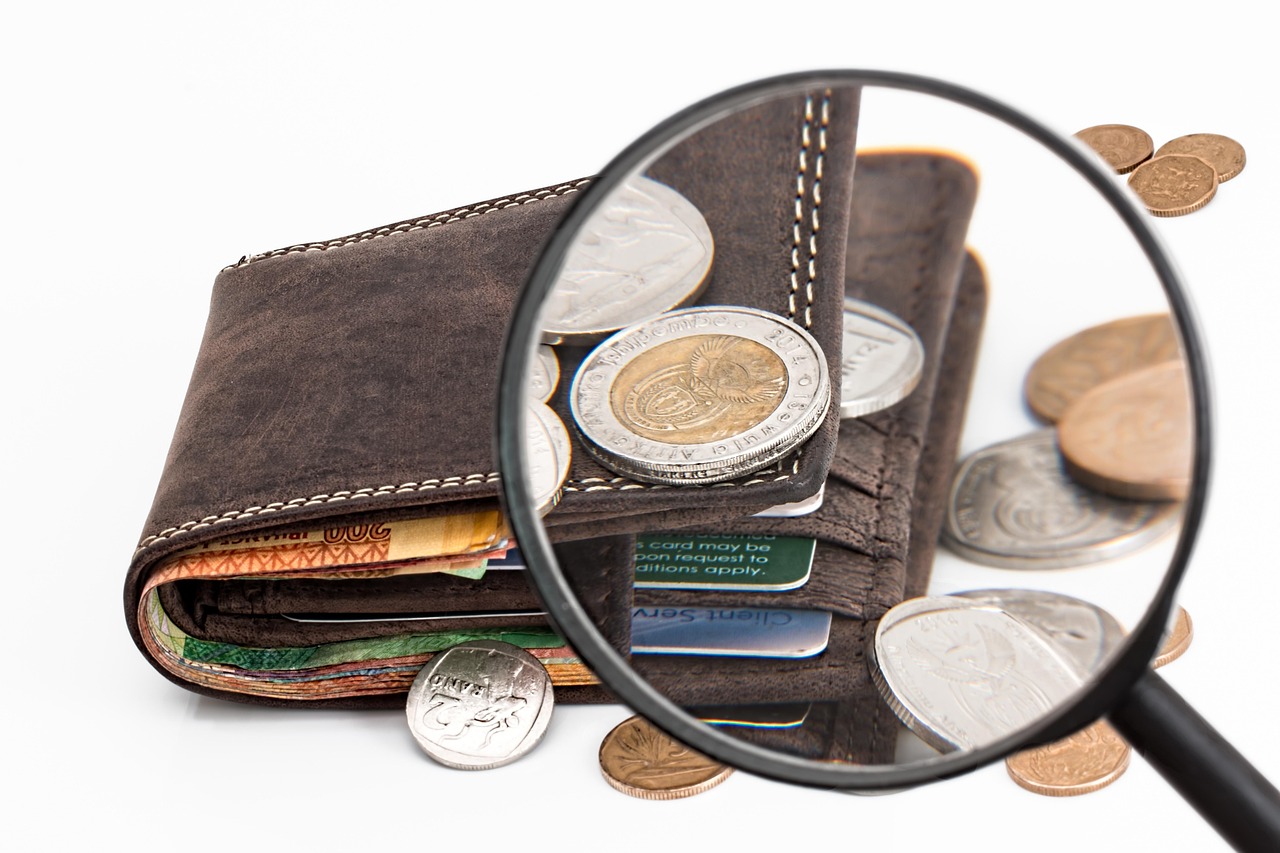
Image by Pixabay
Metrics to measure growth from MVP
When you launch your Minimum Viable Product, you can use various metrics to measure its growth:
- Customer Retention Rates. These include the number of users who continuously use your product. For example, the number of people who renew your product if it requires a monthly subscription.
- Churn Rate. This includes the number of individuals who stop using your product after a specified time. A higher churn rate than a retention rate indicates the need to iterate and improve your product.
- Cash Inflows vs Outflows. You can also measure your company’s growth by comparing the inflows against the outflows. A higher inflow rate indicates that more people are using your product.
- Customer Satisfaction Rates. You should ensure that your customers can offer feedback on your MVP. Customers should be able to rate your product and provide detailed information. This allows you to make improvements. A high rating indicates a high customer satisfaction rate.
Metrics are essential in providing quantifiable data on how your MVP is performing. You should select metrics that align with the goals of your MVP.
MVP and Innovation
Many successful companies launched their products and services through MVPs. They also integrated innovations along the way due to the success of the MVP stage. An example is Facebook, whose MVP product was Thefacebook in 2004. It was launched as a website to connect students at Harvard, where they could create accounts, search for each other’s profiles, and add friends. It was later released to a small group to test whether it could become something bigger.
This stage also involved collecting user feedback and making any changes. It was later presented as an app for connecting to friends and family. Eventually, it became what it is today. Taking the MVP approach allowed Facebook to integrate feedback from early users and take an innovative approach that allowed it to become the biggest social media site today.
Successful real-life MVP Case Study: Uber
In 2024, Uber has more than 6 million drivers and more than 150 million users. Despite its success, Uber started with an MVP program called UberCab in 2010. It was solely launched in San Francisco as a high-end taxi service. The founder, Travis Kalanick, came from a night out with a friend, Garrett Camp –who became his cofounder –and hailed a taxi.
They had to alight since the driver insisted they remain calm. After they alighted, it was difficult to hail a cab, and the idea of Uber crossed his mind. The two agreed on the need for an innovative solution but could not agree on which approach to take. Garrett considered purchasing a fleet of vehicles to offer these services, but Kalanick thought a peer-to-peer (P2P) approach was more feasible. They agreed to test the P2P approach, which is currently Uber’s operational model.

Image by Freestocks via Pexels
MVP development process
After agreeing on the business model, Uber launched its MVP, UberCab. Kalanick pitched the idea to limo drivers in San Francisco, and 30% agreed to use the service. He also tested the reception on the demand side by offering lower prices for the limousines registered under UberCab. The pricing was lower than regular limousine services and town cars, offering customer value. It also allowed customers and drivers to leave feedback on their respective apps.
The reception by drivers and customers was positive, allowing the company to scale quickly. Due to positive reception, the company scaled quickly and started targeting the general market. It moved to cities with a high demand for taxi drivers and was in 8 cities by 2011. The company eventually expanded to different locations in the U.S. and, eventually, 70 countries. This indicates that Uber is still unavailable in 125 countries. Despite being a big corporation, Uber still validates its product before entering a new market.
Challenges faced and solutions
A significant challenge faced by UberCab was ensuring that the demand matched the supply. Since it was a new business model, it was challenging to convince drivers to sign up because they were unsure if they could get clients. To entice clients to sign up, UberCab operated as an invite-only business for exclusivity. Interested consumers had to email Kalanick to access the app. The approach was effective since it targeted high-end consumers.
Eventually, the company had to extend its user base. Releasing the product to general consumers was also challenging since people were used to hailing cabs. Uber was launched during peak times, such as New Year’s Eve, to address this issue since the demand exceeded the number of drivers. The model also allowed a price surge whereby the fares would increase with demand. By integrating these solutions, Uber balanced the demand and supply, encouraging more people to register for the app.
Outcomes and impact on growth and innovation
The market quickly adopted Uber’s P2P business model. The number of users grew rapidly in the U.S. because more people thought it was a more convenient way to hail taxis. Uber raised more than $11 million in the Series A round, allowing it to populate across other cities.
The company continued growing, and more people from developed and developing nations preferred it. The innovative model allowed drivers to connect easily to customers without waiting at strategic spots. Customers could also hail cabs conveniently from their location. Uber’s innovative model has made it the world’s most popular and valuable P2P cab-hailing service.
What are Industry-Specific MVP Examples
MVPs in tech startups
- UberCab for Uber.
- Thefacebook for Facebook.
- An explainer video for Dropbox.
MVPs in healthcare
- Zocdoc began as an app used by dentists and their patients.
- PHA for HealthTap.
MVPs in fintech
MVPs in retail
- Amazon.com, which was a bookstore for Amazon.
- Shoesite.com for Zappos
MVPs in other notable industries
- Air Bed and Breakfast for Airbnb.
- Spotify Desktop App for Spotify.
What are the Best Practices for Developing an MVP?
Steps to create an effective MVP
Creating an effective MVP involves four crucial steps:
- Identify a problem. The first step of creating an MVP is identifying a problem that needs to be solved. In the Uber case study, Kalanick realized that it was challenging for people to hail taxis from any location and at any time.
- Identify potential customers. The next step includes identifying customers who will benefit from addressing the problem.
- Find a value proposition. Value proposition includes what customers will benefit from your product. In other words, it is the solution to the problem identified. Uber’s value proposition was convenience for drivers and customers.
- Validate your idea. You can have a problem and solution figured out. The existence of a gap in the market does not always mean that a product will succeed. Validating an idea is important because it identifies how a product will work seamlessly in the market. You can validate your idea by talking to your potential customers.
- Crafting your MVP design. The next step involves designing your MVP. The design will be in the form of an app or a website. The design incorporates features to address the problem you identified.
- Developing the MVP. You can finally develop your MVP after addressing the previous steps. MVP development will require you to work with some experts.
Following these steps will help you validate your idea and find a proper product-market fit, enhancing your MVP’s chance of success.

Image by Tima Miroschnichenko via Pexels
Common pitfalls and how to avoid them
Three common pitfalls encountered in the MVP development journey include:
- Confirmation bias within the team. Some individuals believe their idea is perfect and will work seamlessly. Their actions will also favor their beliefs about the product. Handling confirmation bias is challenging because many people have strong sentiments about their idea and vision. Gathering feedback from third parties can address confirmation bias within the team.
- Lack of adequate skills to develop a product. Many startup founders lack the skills to develop an MVP product. Using freelancers with expertise in product development can address this issue.
- Time. Some MVPs take longer to develop than anticipated. This leads to pushing back release dates, which inconveniences the founder. You can hire qualified individuals for your project because they will provide a timeline of how long it takes to develop your product.
Encountering challenges when developing an MVP is common. It is essential to have mitigation strategies to address these challenges and achieve your MVP goals.
Tools and resources for MVP development
The tools you can use for your MVP development depend on the type of product. Some common tools used today include:
- Ethnio: Allows users to participate in your research and give feedback on your product.
- Miro: Allows teams to collaborate and brainstorm ideas.
- Maze: Used for product testing; that is, it tests the functionality of your idea.
- Leadpages: Used to make landing pages that can generate leads and improve your conversion rates.
- ProductPlan: Helps startups make roadmaps for their ideas.
How does an MVP differ from a prototype?
Prototypes are models used to show and test your product. A prototype does not contain many features and shows how your product would work. MVPs are different because they have usable essential features released to your potential customers who agreed to take an early bet on you.
Why are MVPs Important for Startups?
- Startups save on costs by developing MVPs since they incorporate a few usable features for early-adopter users.
- Startups can receive feedback from consumers through MVPs and make changes before scaling, enhancing their chances of success.
- You can gather data and insights after customers use your MVP for a specified period. The data and insights are important in validating your idea.
- Startups mitigate risks using MVPs in the early stages of development since they understand what works and what doesn’t.
How can MVPs Reduce Risk in Product Development?
- By only incorporating essential features that solve customers’ most pressing needs, which leads to a minimal usage of resources.
- By releasing the MVP to a small group of early adopters. The startup then incorporates the feedback offered by early adopters before selling the product full-scale in the market.
- By using low-cost approaches to reach early adopters for example, having a small marketing budget to reach your target consumers.







[…] side project in November 2010. Joel Gascoigne wanted a simple tool to schedule tweets. He built the Minimum Viable Product (MVP) on his own, and within months, hundreds of users joined. His team grew slowly after joining […]