


A concept prototype is used in early-stage product development to simulate a product and demonstrate how it works in the real world. A concept prototype in early-stage product development is a practical illustration of how the end-user interacts with the interface of your tech product.
Building a tech product aims to offer a solution to users and early adopters. You want to ensure you have a clear picture of your product by having a precise design with little to no flaws.
This is where concept prototyping comes in—it demonstrates how your final product looks without coding or integrating other aspects that go into building the actual product. With concept prototypes, you experiment with the design and functionality of your product and validate it before you invest more money and other resources into building it.
Concept Prototypes in Early-Stage Product Development
Prototypes are models and visual representations of your product that offers a solution to target audiences. Before investing too much in your actual product, you can use mockups or models that mimic it to determine whether it is feasible and solves the problem.
How concept prototypes facilitate idea validation
“Test before you invest” is a motto you should adopt if you’re in software development. Many product ideas seem good at face value, but how desirable are they to your target customer? You want to ensure your product idea has a chance of success before investing a lot of money and time into it. This is where concept prototypes come in. It facilitates idea validation by demonstrating abstract concepts that can be tested in tangible forms.
Concept prototyping enables you to validate your idea by establishing its:
- Feasibility: Is it technically possible to build your product? Which programming frameworks do you need to bring your product to life? What is the complexity level of the features and workflow?
- Desirability: Do people want your product? If yes, what is the urgency level when making the decision to buy your product? Does it meet their needs? Does it offer them any value?
- Viability: Is your product financially viable? Will people pay to use it?
Concept prototyping allows you to build an interactive model that you can use to test and determine the feasibility, desirability, and viability of your product before you build it.

Role in Gathering Feedback
A concept prototype can be interactive, which basically means the prototype will simulate a real-life interaction in terms of how users interact and navigate it. Interactive models let you get feedback and test your future product’s usability and acceptability with real users. The target audience for a prototype includes your co-founders, early-stage investors, mentors, and team members.
These audiences can assess the layout of this prototype, conduct some tasks within it, and give feedback on how well they navigate it. The feedback serves to redesign and further develop the concept prototype until you develop something feasible, desirable, and viable.
Importance in Refining Product Concepts
Flexibility should be in mind when you are developing tech products. The same case applies to prototyping. Once you design a concept prototype, you aim to test whether what you have designed makes sense or not.
To test your prototype, first discuss this internally with your co-founders and mentors, or identify a few people from your target customer base and run the prototype through them. Reach out to them upfront and tell them they need their feedback time.
You might have to reach out to 100s of people before a couple of them agree to give you feedback. Based on the feedback you receive, you refine your product design blueprint, redesign it, or abandon it entirely and build a new prototype that is more functional and appealing to end-users. Therefore, once you commence the journey of building your product, you will have something that is fully fleshed out.
Cost-Effectiveness
Prototyping has become common in product development because it is a cost-effective approach that saves companies from investing a lot of money without knowing how their product will perform. Product development requires investing in mobile or app developers, product managers, UI/UX designers, etc.
You don’t have to work with this entire team when building concept prototypes in the early development stages. You can work with designers to build and test prototypes. Prototyping also helps you get a clear picture of the team you will need to bring your idea to life.
Once you prove feasibility and functionality through concept prototyping, you can hire the right and skilled team to help bring the idea you envisioned to life. Thus, you won’t waste resources by bringing in more team members than you actually need.
Speed of Development
Prototyping is a major part of the lean methodology. The lean methodology has a principle named “fail fast” in software product development. This principle means testing your assumptions fast before you invest so much money and resources in product development.
The process helps you understand what works and what doesn’t, leading to better solutions. In concept prototyping, you study what went wrong and gain insightful feedback so that you make sure the next version, or design, is better than the last. You build on the principles of failing fast through quick development, testing, and redesigning of your prototype.
It also accelerates the development process in general since it creates a clear picture of what your product will look like, how it will work, and how to bring it to life. Once you begin to build your product, you would not like to be in a situation where you re-strategize over and over again for not having a proper demonstration of all that goes into building it, which will simply waste a lot of time.
Improved Collaboration within Teams
Prototyping provides a great reference point for your team because it visually represents your tech product. This makes it easier for your team to understand the requirements of developing your product and what is expected from each of them. Your team can also communicate seamlessly, solve problems faster, and reduce misunderstandings because they are on the same page about what building the actual product will entail.
Enhanced User Involvement and Feedback
Prototyping allows user involvement by simulating interactions with real users. It is an interactive demonstration of your product, and users can interact with it and give insightful feedback. This helps with the early validation and refinement of your prototype. As a result, the tech product you develop will be user-centric.
Concept prototypes help determine the practicability of your product by defining its feasibility, desirability, and viability. They are visual and small in scale, saving you a lot in costs. They further allow you to garner user feedback, refine your concept, and give your team an overview in terms of requirements and expectations from the actual development process.
Types of Concept Prototypes
Concept prototypes will help you in making different design possibilities to visualize what your intended final product will look and be like. There are two main types of concept prototypes: low-fidelity and high-fidelity prototypes. We can further the divisions to visual and functional prototypes. Each of them is relevant for different purposes and stages in development. An analysis and clear view of the two types of prototypes are going to follow.
Low-fidelity prototypes
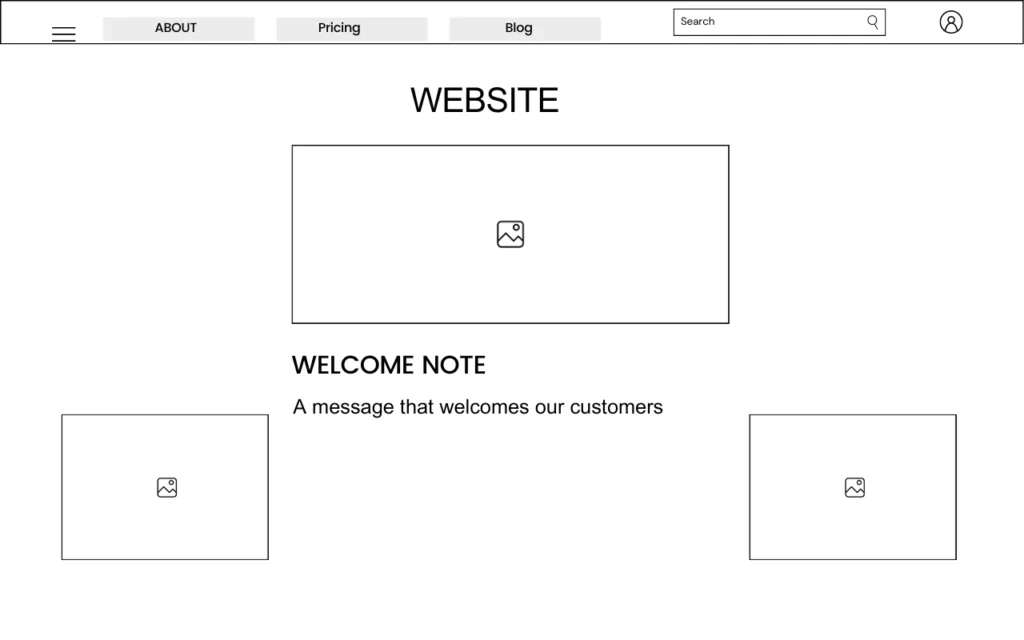
Low-fidelity prototypes are most efficient in the early development stages because they are made as quickly and cheaply as possible. To paint a clear picture, consider a low-fidelity prototype as a rough draft of your product before you move to create something that is more detailed.
These prototypes can exclude the functionality and features of your product. Wireframes and sketches are examples of low-fidelity prototypes. For instance, consider the image below. It is a wireframe for a website. It only includes a few details to show the appearance of the home page. The design is easily made and can be discarded or redesigned once you flesh out what will go to the website.
High-fidelity prototypes
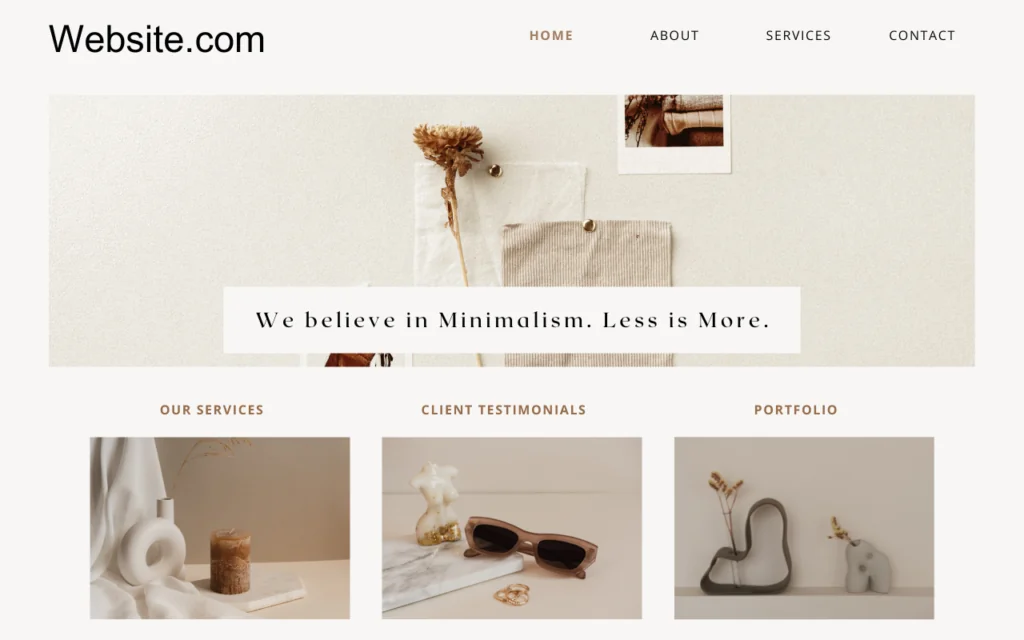
High-fidelity prototypes differ from low-fidelity prototypes because they are as realistic as possible without actual product development. They contain finer details that are closer to the solution. They are also interactive and contain functionality since they are the closest representation of your product.
High-fidelity prototypes come right before execution, that is, building the real product. They are used in later stages of development to identify any issues in the workflow of your product.
The visual appearance of high-fidelity prototypes is also quite similar to the final product since they need to be as realistic and close to it as possible. The image below is an example of a high-fidelity website prototype. It shows all the information that goes into the home page, including the typography, images, colors, and the call to action (CTA) buttons.
Visual vs. functional prototypes
Visual prototypes mostly focus on the look of your product by showing design and layout with little interactivity. They usually come in when illustrating the look and feel. A functional prototype, on its part, primarily focuses on how the product will work. They might lack a fleshed-out visual design, but they’ll show you the core functionality of your prototype.
Low-fidelity prototypes are more suitable for early development stages, while high-fidelity prototypes are more suitable for later development stages. Low-fidelity prototypes are like a rough draft of your product idea. High-fidelity prototypes are realistic, interactive, functional, and closely resemble the final product.
How to Create a Concept Prototype?
A concept prototype is a formative, tangible model that transforms an idea into something visual and testable. It’s an early model made for exploring and validating basic ideas before large resources are committed to the development of a final product. In other words, the intent of a concept prototype is to transform an abstract idea into concrete form so that one can test functionality, design, and user interaction.
Step-by-step process
Concept prototyping involves developing simplified concepts to test the functionality of your product. Here’s how you can build a prototype of your product idea that captures the essential features and functionality.
- Defining prototype scope: The first thing you need to do is determine the kind of solution that you want to offer with your product. Also, it’s important to think of what you want your developed product to achieve so that you can build a prototype that will meet these needs.
- Requirements gathering: During this phase, you need to establish what you need in order to bring the prototype into reality. You decide on the main features that your prototype will have, the design, and the technologies you require to develop the prototype. The requirements-gathering stage also allows you to work out how much creating your prototype will cost.
- Building the prototype: Now that you have gathered requirements, you can build the first version of your prototype.
- Testing and feedback: This is the stage in which you will identify an audience to provide feedback on your prototype. Target audiences for prototypes are usually internal stakeholders, like the team or prospective investors. These test functionality and user experience. Your prototype does not need to be functional. It does, however, have to illustrate functionality and how your product will solve a problem for your target audience. Real users are perfect in testing a prototype if it is functional because they actually provide feedback based on an end-user perspective.
- Review and repeat: This is where you take in the feedback from the actual users, and based on it, you re-design your prototype or build an altogether new one. You then release the new version to the users for feedback until you come out with a feasible and functional version you can transform into an actual software product.
Designing a concept prototype is an important phase in software development. Clearly detailing your objectives, determining the appropriate technologies, and responding to feedback assist in your concept and handling any unexpected problems much earlier.
Practical tips for effective prototyping
Some tips to consider when prototyping include the following:
- Define the scope so your prototypes are aligned with the big picture (the actual product).
- Use low-fidelity prototypes at first, since they can be built and disposed of quickly and inexpensively.
- Make the interactions of the users easy.
- Don’t forget to collect feedback and redesign your prototype based on it.
- Build the high-fidelity prototypes in later stages of development.
By following the tips outlined above, you ensure that the process is fine-tuned so that prototypes will prove valuable in your final and real tech product.
Common Challenges in Concept Prototyping and Solutions
Prototyping is an integral part of the development process of new products since it gives an insight into the design, functionality, and user experience of products. Associated with this process, however, are some challenges. Some challenges and their corresponding solutions include:
- Testing Accuracy Challenges: Interactive prototypes simulate real-world conditions. At times, it is challenging to replicate these conditions into the prototypes and get accurate results.
Solution: Use real users when testing your product and gather feedback from them. Also ensure the users you select are the right target audience.
- Replicating a solution into the prototype: This challenge comes up when someone has a solution in mind, but making it feasible and functional to bring a product that translates to this solution to life is challenging.
Solution: Consult with experts to see how you can work around this challenge. They can also offer advice on the right technologies to use to build your prototype and product.
- Technical Challenges: Some prototyping tools may not be capable of building the exact prototype you need, especially if it is complex.
Solution: Requirement gathering to determine the right technologies to build your prototype.
Understanding the challenges outlined above and developing strategies to address them are very important in optimizing the prototyping process for the best results for your final product.
Conclusion
Concept prototyping refers to an early-stage approach toward the development of software that can greatly help with product visualization. It serves for the modeling in preliminary stages that will let one first examine and test, then improve upon the idea before its final production. A concept prototype helps to shift abstract ideas into something you can view, touch, and even interact with to give a clear picture of how your final product looks and functions.
This prototype does not have to be perfect or complete but rather shows the key features and functionalities. It’s a grounding area for your concepts, through which you can get to know your strengths, weaknesses, and where improvements may lie. Prototyping means the visualization of your product idea, getting feedback, and validating assumptions to make informed decisions moving further into the stages of development.
What Tools and materials are needed to build prototypes?
Different tools and materials play different roles in building prototypes. They include:
Wireframing Tools: Balsamiq & Axure RP
Mock-up Tools: InVision & Proto.io
Graphic Design Tools: Adobe Photoshop & Adobe Illustrator.
UX/UI Design Tools: Sketch & Figma.
The tools you select depend on your budget and the needs of your project.









[…] prototype is a tangible “what if?” thrown into the world to see how reality talks back. Whether […]
[…] is where things start feeling real. A prototype doesn’t have to be fancy. Clickable mockups, interactive slides, or even a napkin sketch with […]
[…] key element of app development is ensuring that your product meets regulatory standards while safeguarding your interests and those of your […]