


Effectively hiring and managing a freelance web developer is a significant process in your product development journey that involves finding the right team for your project. Effectively hiring and managing freelance web developers requires more than just finding individuals with the necessary technical skills to build your product.
It’s equally important to identify developers who align well with your organization’s culture and possess the right soft skills, such as clear communication, adaptability, and the ability to collaborate effectively.
How to Assess the Right Freelance Web Developer for Your Project?
Assessing a freelance developer involves evaluating their technical and communication skills and examining how well they fit your culture and project’s vision.
Reviewing portfolios and past work
Reviewing portfolios helps you find the right freelance developer by giving you insight into their expertise and familiarity with the technologies necessary to develop your product. You can gauge the developer’s capabilities by looking at the diverse projects they have previously worked on and determining if they align with your needs.
Importance of checking client testimonials and reviews
Checking testimonials and reviews is essential when assessing whether a freelance developer is right for your project. They are personalized critiques about developers from individuals and companies who have previously worked with them. They help you gain confidence working with a developer by reviewing the quality of work they produce, their reliability, and their work ethic.
Conducting technical interviews or coding tests
Technical interviews help determine whether the developer has the necessary skills to develop your product. The questions asked in the interview can include real-world scenarios and how the developer would approach them. When interviewing a developer, you can also add coding tests through platforms such as LeetCode, CodeSignal, and HackerRank. Conducting these tests helps you assess their technical skills and problem-solving capabilities.
Assessing problem-solving skills and creativity
Evaluating the creative abilities of a developer is essential in determining how they analyze and generate innovative solutions to problems. To determine a developer’s skills:
- Review their case studies or past projects,
- Ask about a past problem they encountered and how they solved it, and,
- Present hypothetical challenges and ask them to solve them.
Assessing a developer’s creativity helps you gain insight into their thought process, coding style, and approach to technical problems.
Evaluating cultural fit and work ethics
Finding the right fit for your company requires you to analyze the developer’s soft skills to gain insight into how they will interact with other team members. When interviewing them, you should:
- Ask questions that give you insights into the developer’s values,
- Include situational scenarios that require the developer to reveal how they would collaborate with team members to solve a problem and,
- Ask them to reflect on past experiences that have enlightened you about their work styles and ability to work in teams.
A developer who fits your culture positively enhances your team’s dynamics and ability to perform effectively.
Finding a freelance web developer who aligns with your project’s needs lays a strong foundation for success. You can also establish a long-term contract if the web developer fits perfectly well into your organization’s culture.
How to Manage a Freelance Web Developer Effectively?
Managing a freelance web developer effectively requires open communication to create a constructive, supportive, and productive environment. Effective management includes:
- Setting clear expectations and deadlines by stipulating the developer’s roles, responsibilities, deliverables, and the relevant timeline.
- Providing constructive feedback by commending the developer on what they’re doing right and pointing out areas of improvement.
- Facilitating regular check-ins to track their progress while ensuring tasks are completed per the schedule.
- Handling delays and unforeseen issues by determining the root cause and looking for possible solutions. Ensure your team is part of your problem-solving process.
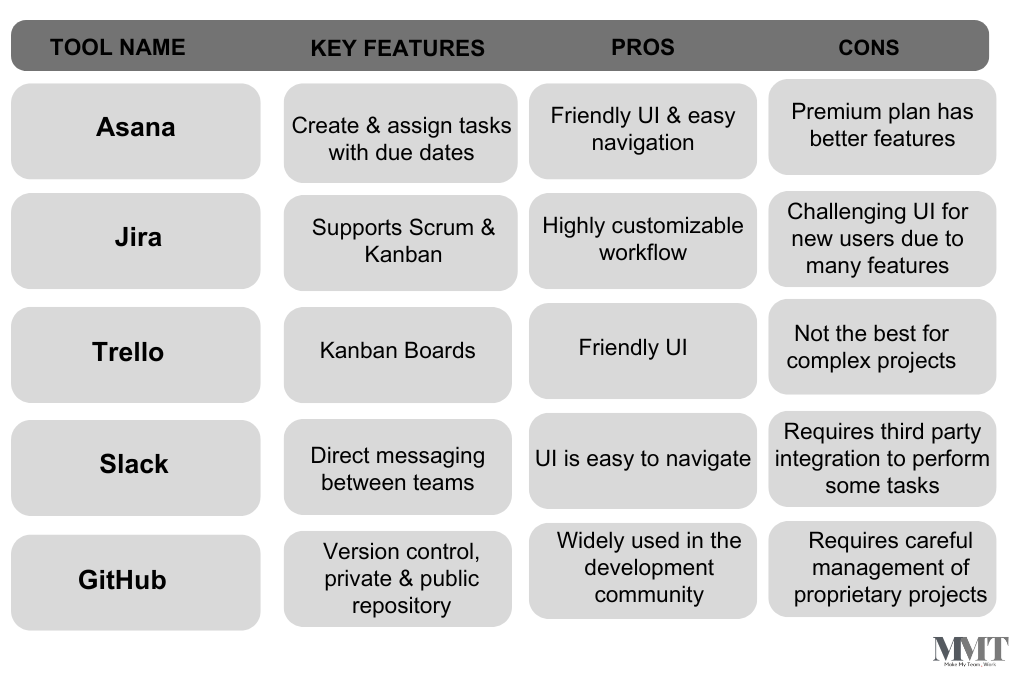
In addition to these practices, project management and collaboration tools should be utilized to structure communication for maximum efficiency.
Tools to Manage Freelance Web Developers
How to Structure a Contract with a Freelance Web Developer?
When you hire a freelance web developer, it is important to have a formal agreement that clarifies everyone’s responsibilities and ensures alignment with the project’s goals. It protects you and the developer and offers legal remedies if either party breaches the terms.

Image by Edar via Pixabay
Essential clauses to include
A contract with a freelance web developer should be clear and detailed to set proper expectations and prevent misunderstandings. It usually has the following clauses:
- Scope of work: This section provides specific details about the deliverables expected of the developer. Clearly defining the deliverables provides a clear framework of accountability from the freelancer.
- Terms of payment: This segment specifies the payment amount—whether the freelance web developer will be paid hourly, monthly, per milestone, or a specified amount for the entire project. It also includes payment modes such as bank transfer, Paypal, Venmo, wire transfers, etc.
- Timeline: This part includes the deadlines for the deliverables and milestones.
- Intellectual property rights: The section outlines who owns the rights to the work. For example, in a work-for-hire contract, you retain the rights to the work produced after completing the agreed-upon payment.
- Confidentiality clause: This segment protects sensitive information you don’t want the freelancer to share with third parties. It should include the duration, which can extend past the term you work with the developer.
- Indemnification: This clause protects you and the developer (both parties) from potential losses if a breach occurs. It should include a legal recourse that guides both parties to seek remedies in the event of a breach.
- Arbitration clause: This segment guides and streamlines the dispute resolution approach to use in case any issues arise with the developer.
- Termination clause: It determines the terms under which your contract with the developer can end before the agreed timeline expires.
The parties involved should thoroughly review and understand the contract terms before signing them because they have legal implications for everyone’s rights and obligations.
Importance of confidentiality agreements
Non-disclosure agreements (NDAs) are essential because they protect sensitive information related to your product. These agreements safeguard:
- Your business plan, which affects your market position and competitive advantage,
- Insights from market research,
- Product specifications,
- Intellectual property, such as ideas and patents, and,
- User data.
A confidentiality agreement protects your strategies, technologies, and unique ideas and gives legal redress if a developer fails to honor the terms.
Milestone-based payments vs. hourly rates
When you work with a freelance developer, you can either pay them hourly rates or milestone-based payments. In an hourly-based system, you pay the developer for each hour of work performed. Hourly rates for freelance web developers range from $15–$120, but they vary depending on location and expertise.
In milestone-based systems, you pay the developer based on the completion of specific deliverables. An example is paying the freelancer after they develop the core features of your Minimum Viable Product (MVP). This approach financially incentivizes a freelance developer to deliver on time.
How to handle scope changes and revisions
Before a project begins, a clear scope that outlines features and deliverables is established. Changes in technology and evolving market trends can lead to scope changes, which require you to revise your project. You should handle this by:
- Defining how you will handle scope changes,
- Communicate the possibility of scope changes with the developer and agree on how to handle them, for example, changes in timeline and payment, and,
- Prioritizing changes and focusing on the ones that deliver the most value.
Changes in scope are common in product development due to the need for adaptability. Therefore, you need to allocate a specific percentage of your project’s budget to handle these changes.
Termination clauses and dispute resolution
It is common for contracts with freelance developers to end before their natural expiration. The reason for termination can arise from either side; for example,
- Low quality of work from the developer,
- The failure to perform and,
- Your company faces financial issues, forcing your project to halt.
When working with freelancers, it is important to have dispute resolution mechanisms, such as arbitration and mediation, to protect your interests (and your contractor’s) and navigate disagreements effectively.
Before working with a freelance developer to build your product, ensure you have a contract in place. It sets a clear foundation for your working relationship and helps maintain professionalism.
Challenges in Hiring and Managing Freelance Web Developers and How to Overcome Them
Like any other project, you can encounter setbacks that complicate collaboration with freelance web developers. The failure to address these obstacles can affect the outcomes of your project:
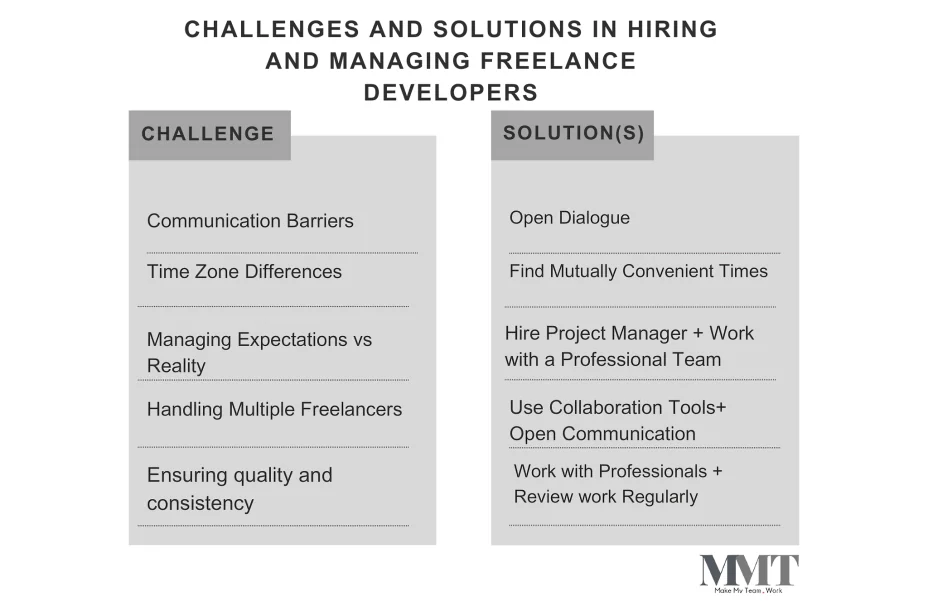
Communication barriers
Communication barriers can arise when working with freelance web developers due to cultural differences, misinterpretations of project requirements, language differences, etc. To handle these barriers, you should:
- Foster an environment that allows everyone to seek guidance and express their thoughts,
- Understand and navigate cultural differences within your team, and,
- Encourage open feedback.
Handling communication barriers prevents misunderstandings, inefficiency, and conflict, leading to better outcomes for your project.
Time zone differences
Time zone differences are common when working with freelancers from different geographical locations. They result in conflicting working hours, which makes it challenging for you and your team to collaborate. To handle this challenge, you should:
- Find mutually convenient times that your entire team agrees on for meetings and collaborations, and,
- Use project management tools to plan and coordinate your project.
Addressing time zone differences streamlines your team’s workflow, fosters collaboration, and prevents delivery and communication delays.
Managing expectations vs. reality
This challenge occurs when the reality of developing a product differs greatly from what you anticipated. These expectations are based on the timeline for completion (anticipating fast project completion), features, and quality of work produced. To manage expectations, you should:
- Hire an experienced product manager with a comprehensive understanding of product development. They also set realistic goals for your project,
- Research and gather insights to understand what is feasible and,
- Seek guidance from developers on what to expect from your project.
Hiring a professional team (including freelance developers) helps you understand what you can realistically anticipate from your project under current conditions.
Handling multiple freelancers or a remote team
Coordinating multiple freelancers remotely can be a challenge due to differences in availability, communication working styles, and skill levels, which inhibit the workflow of a project. To address this issue, you should:
- Communicate the goals of your project clearly and efficiently to your team,
- Hold a weekly or bi-weekly meeting to check in on the team, get updates and offer feedback, and,
- Utilize collaboration and project management tools to centralize your work.
Ensure open communication during the entire product development cycle to foster team alignment and ensure everyone is on the same path to achieving your vision.
Ensuring quality and consistency
Maintaining quality and consistency during the entire project can be challenging, especially if you’re working with a freelance developer(s) whose work ethic you’re unfamiliar with. To mitigate this challenge, you should:
- Review previous projects, client testimonials, and reviews before hiring a developer to get a hint of their work quality and what it’s like working with them,
- Hire a product manager who is familiar with your project to monitor the progress and ensure quality during the entire development cycle and,
- Monitor and review the developers’ progress regularly and conduct quality assurance and control processes to ensure they produce high-standard work.
Ensuring high standards during the entire development cycle helps you and your team build a product that meets functional requirements and user expectations.
A well-executed and consistent development process helps build a strong foundation for a high-quality product that enhances your chances of success.
FAQs
What are the key differences between hiring a freelance developer and an agency?
Developers often work independently or as part of small teams, while agencies comprise professionals with different areas of expertise, such as design, development, and marketing. Working with a developer is suitable for smaller, non-complex projects that don’t require comprehensive solutions.
How much does it typically cost to hire a freelance web developer?
The cost of hiring a freelance web developer is not definitive. It varies based on their expertise, how they charge (per project or per hour), and the complexity of your product. Hiring developers for basic products ranges between $5,000 and $15,000, and complex ones range from $15,000 to $30,000.
Can a freelance web developer handle large-scale projects?
Freelance web developers can handle large-scale projects depending on their technical expertise and skills. However, be sure to review testimonials from previous clients to ensure the developer is not the type to bail out in the middle of a project because it can grossly inconvenience you.
What should I do if a freelance developer doesn’t deliver on time?
When a developer fails to deliver on time, the first step is to understand the reason. You should handle a delay that aims to benefit your project with leniency, for example, if they were optimizing code. However, the delays should not be frequent because they can affect the time it takes to release your product to the market. Continuously communicate with your developer on the need for timely delivery.










[…] a startup, finding a good developer is not enough. You also need to hire someone with the right skills to specialise in the specific product you want to build. They should align with your […]
[…] the years, I have hired many tech developers in different roles, from full-time to part-time to fractional work. In this article, I will help […]
[…] of features that meets the needs of consumers. A clear understanding of your consumers guides your web development process and ensures your approach is user-centric because meeting user expectations enhances their […]
[…] type of mobile app you intend to build, and costs influence the kind of developer you hire . Hiring cross-platform and hybrid developers tends to be cheaper than hiring native developers […]
[…] or functionality, for example, linking a website to a payment getaway such as Paypal or Stripe. The backend developer you hire to develop your product should be skilled […]
[…] Choosing the right platform to hire freelance talent is essential. Since you don’t have the skills required to understand the competence level of the potential freelance candidate, it’s better to choose a platform that helps vet the talent on your behalf. […]
[…] Choosing the right platform to hire freelance talent is essential. Since you don’t have the skills required to understand the competence level of the potential freelance candidate, it’s better to choose a platform that helps vet the talent on your behalf. […]