


Technical, functional, and soft skills are essential when looking to hire an app developer. App developers are software engineers who design, build, test, and maintain applications (apps) for various platforms, primarily mobile devices (iOS, Android), but also web and desktop, using programming languages like Java, Swift, Kotlin, Python, or C++, often specializing in specific operating systems or cross-platform frameworks to create user-friendly software for entertainment, productivity, or business.
Businesses should prioritise expertise when looking to hire an app developer because it showcases the skill set, skill level, and knowledge of technologies used to develop a product, followed by interpersonal skills.
Before a product reaches consumers, it undergoes a thorough iterative cycle of discovery, design, and build. This process requires a collaborative effort from a dedicated team, where each member plays a crucial role. To ensure a smooth and efficient process from start to finish, your team must maintain a high level of alignment and communication, allowing for seamless coordination and the effective integration of ideas and feedback.
Understanding Your Needs
App development is a complex process that requires careful planning and strategic execution for a successful outcome. Understanding your needs ensures the development process is guided and focused, and team efforts align towards a shared vision.
Defining your Project Scope and Requirements
Project scope and requirements describe what you want your app to do and achieve, as well as the corresponding deliverables. They guide your development team on what needs to be accomplished by providing a framework of your app’s goals, features, and functionalities. To define your project scope and requirements:
- Conduct market research to help you identify current market standards, gaps left by competitors, and the needs of your target audience.
- Define the goals and objectives of your app,
- List your app’s core features,
- Create user personas to understand your target audience and,
- Review and refine where necessary.
Having a clear project scope helps you determine whether to hire a small team of developers, a larger team, or work with an agency. Agencies (or a larger team) are more suitable for complex projects requiring diverse skill sets.
Setting a Budget to Hire an App Developer
Careful planning and budgeting are crucial for the success of your app, as any miscalculations can significantly impact the overall development costs. These expenses can be particularly burdensome for startups due to limited funding, potentially jeopardizing the entire project. Below is a detailed breakdown of typical costs involved in app development:
- Planning and Research: Understanding the market, target audience, and analyzing competitors:
- Design: Prototyping and designing the user interface and experiences.
- Development: Front-end and back-end development.
- Deployment: Costs associated with publishing in app stores and hosting fees.
- Marketing: Creating promotional content to reach your target audience.
- Maintenance and Updates: Support activities after your app is launched.
- Hidden Costs: Examples include testing and quality assurance, compliance fees, and third-party integration costs.
Having a realistic budget is essential for your project’s success. Take time to reassess your project and eliminate non-essential features if your funds are inadequate. Alternatively, consider seeking additional funding or negotiating with developers to explore an equity-based payment model, where they receive a percentage of equity in the app. It is best to wait until you acquire sufficient funds if none of these options are feasible.
Evaluating and Selecting Developers
Finding the right app developer is daunting because it’s crucial to identify someone with the specific skills needed to turn your app idea into reality. This requires a thorough assessment of potential candidates to confirm they have the technical knowledge and experience to address your project’s unique requirements. Investing time in selecting the right developer helps prevent future issues and sets the stage for a collaborative partnership and a high-quality app.
Skills and Experience to Look For
Hiring
To hire an app developershould be more than just about checking their technical skills; it’s also about understanding how they solve problems and their experience with the technologies crucial for your app’s development. The following are skills you should look for when hiring developers:
- Technical skills: Evaluate how proficient the developer is with the programming languages, frameworks, libraries, and tools necessary to develop your app. The developer(s) should have the right tech stack because it directly impacts the efficiency of the development process and the performance, scalability, and maintainability of your app.
- Experience in your industry: A developer must be technically proficient and have industry-specific experience that aligns with your needs. For example, a developer should be knowledgeable in Kotlin and Java if you want to build a mobile app for Android devices and Swift and Objective-C for iOS devices.
- Previous projects and portfolio: This helps you gain insight into their experience with app development, problem-solving capabilities, and the types of apps they develop based on past projects. You should also look at the tech maturity if you decide to work with an agency.
- UX/UI Design Capabilities: Examine a developer’s understanding of design principles by reviewing their portfolio. When looking at a previous project, closely assess the design aesthetics they used, ease of use and navigation, and overall user experience. You should also ask the developer why they made a specific design choice (e.g., contrast and alignment) and how it impacts the user experience.
- Problem-Solving Abilities: Analyzing a developer’s problem-solving abilities is important because it helps assess their capability to tackle challenges, adapt to new situations, and contribute effectively to your project. It helps you gauge their innovative-thinking capabilities to develop solutions to complex problems, debugging skills, and how well they persist when faced with challenges without giving up.
By evaluating these factors, you go beyond a developer’s resume and ensure they can effectively complete tasks and tackle challenges. This results in a smoother and more successful development process.
Checking References and Testimonials
Client testimonials and reviews are important since they come from people and businesses that have collaborated with the developer. These insights reveal the developer’s work quality, work ethic, and dependability. Client feedback also shares their experiences, giving you a sense of the developer’s character and how easy they are to work with. Overall, reviews and testimonials provide a clear picture of what you can expect when you begin working with the developer.
Conducting Technical Interviews
A technical interview helps you understand a developer’s expertise, problem-solving capabilities, and technical proficiency. To determine whether a developer has the right technical skills needed to develop your app:
- Ask about their experience with technologies required to develop your app,
- Understand their development process to determine whether their workflow process aligns with your project’s needs and timeline,
- Design a coding challenge for them to solve,
- Inquire about the quality assurance and troubleshooting processes. You can present a hypothetical issue and ask their approach to solving it, and,
- Assess their collaborative and teamwork capabilities to determine their communication skills and how well they work with others.
A scoring system that evaluates the quantitative scores, e.g., from coding challenges, and qualitative scores, e.g., how informed the developer was, can help you determine whether their technical skills match your needs.
Common Pitfalls to Avoid in the Evaluation Stage
There are obstacles to navigate when searching for an app developer to ensure you find the right candidate. They include:
- Over-prioritizing developers’ technical skills and overlooking their soft skills and how well they fit into your organizational culture,
- Focusing too much on their experience and not how well-versed they are with the specific technologies relevant to developing your app,
- Failing to review their portfolios extensively and only relying on what they tell you about their expertise, and,
- The failure to administer practical assessments to determine how well they handle real issues. Some individuals excel in interviews but cannot translate their skills appropriately in real life.
To avoid these pitfalls, ensure you engage in a rigorous hiring process that vets candidates based on their skills, expertise, experience, and compatibility with your project’s needs.
Detailed information about a developer’s background is essential before hiring. Comprehensive research can help you understand their technical abilities and work ethic. This helps you select a developer who fits your project’s requirements and contributes positively to the dynamics of your development team.
Cost Considerations
The costs of hiring a developer differ significantly depending on various factors, including their expertise, the project’s complexity, and the technologies employed.
What is The Average Cost of Hiring an App Developer in Different Regions?
Factors such as experience, location, tech stack, etc, influence the cost of hiring an app developer. The table below shows a breakdown of the approximate hourly rates for hiring a developer based on region.
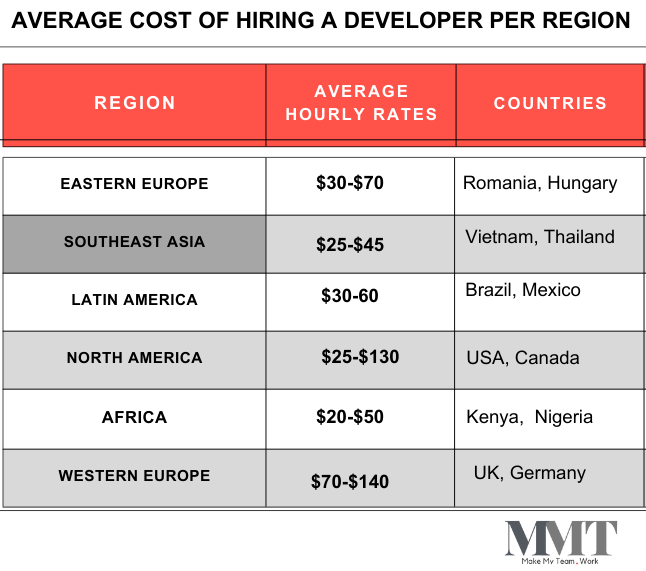
While it’s essential to stay within your budget, it’s equally important to prioritize a developer’s skillset and experience because it significantly affects the quality and success of your app.
Negotiating Contracts and Terms
Negotiating contract terms is essential in establishing a mutual understanding of expectations with your development team. It also ensures that all parties are comfortable with the contract terms to prevent strain on themselves and keep developers motivated throughout the project. You should consider the following tips when negotiating with developers:
- Research and understand current market rates so you are knowledgeable when negotiating with developers and agencies,
- Define your project scope so you can negotiate based on its needs and requirements,
- Seek legal help and guidance from professionals where necessary,
- Establish quality standards for your project, such as regular updates, commitment, deliverables, etc, so developers know what is expected of them and,
- Be open-minded, flexible, and willing to make compromises for mutually beneficial outcomes.
When looking to hire a development team, you should be prepared to walk away. It is common for a developer or agency not to meet your needs during negotiations. In such instances, walk away and explore other options until you find a team that aligns with the requirements detrimental to your project.
Communication and Project Management
Project managers spend 75-90% of their time on communication in a project environment. While communication is important to a project’s success, spending this much time on it shows that many things are not going well. It indicates the need for excessive discussions that consume valuable time. Clear communication while utilizing project management tools allows team members to focus on their tasks as the project manager oversees the achievement of milestones.
Importance of Clear Communication
Clear communication isn’t about communicating more but properly articulating expectations so that all stakeholders understand the message being conveyed. Clear and effective communication is essential because it:
- Ensures that all team members clearly understand your needs and project objectives,
- Prevents misinterpretations and misunderstandings that lead to reworks and project delays,
- Helps team members understand their individual roles and responsibilities,
- Allows efficient collaboration whereby team members share ideas and give feedback, fostering a problem-solving and innovative project ecosystem,
- Ensures team members understand project timelines and deliverables.
Clear communication helps you create an organized environment and maintain a smooth workflow. Every team member is well-informed of their role in ensuring your project’s success.
Setting Milestones and Deadlines
Milestones and deadlines are checkpoints that mark significant deliverables in a project. To effectively set project milestones:
- Define the project scope, goals and objectives,
- Break it down into small, manageable tasks,
- Define key milestones (use SMART criteria),
- Assess the complexity of each task and determine how long it will take to complete them,
- Identify which tasks depend on the completion of others to schedule them in the right order,
- Prioritize tasks and set realistic deadlines for each milestone,
- Create the project’s timeline.
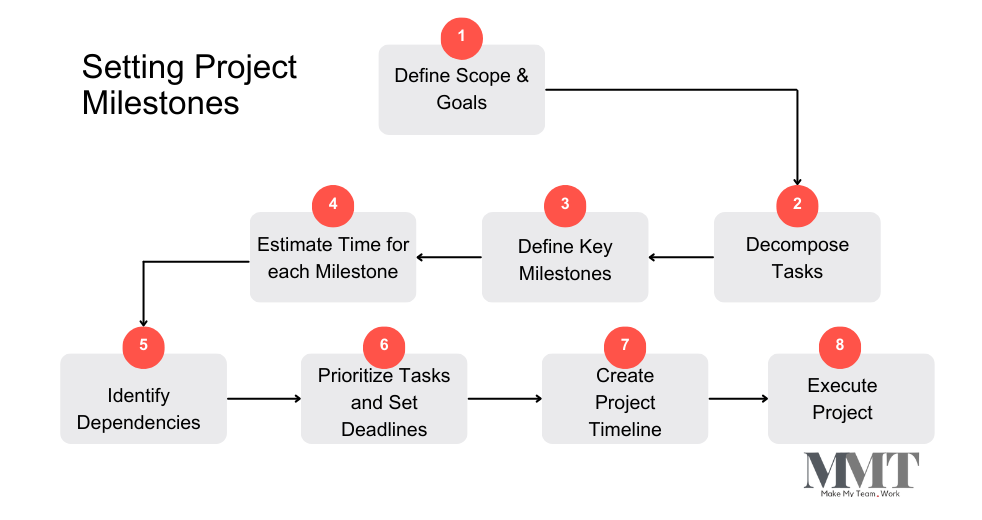
When mapping out your project, use visual tools such as Kanban boards and Gantt charts to represent tasks and dependencies and illustrate their sequence.
Regular Updates and Progress Reports
Regular updates and progress reports are vital to determining the health of a project. In creating an environment for regular updates, you can:
- Monitor the project’s process and ensure it matches with the project plan,
- Detect and mitigate issues early to avoid derailing the project,
- Hold your team accountable by ensuring they meet their deliverables and,
- Engage stakeholders (such as investors) and inform them of the project’s progress, which maintains their trust and confidence.
Continuous communication ensures that every team member is well-informed of the project’s progress. It informs them about areas for improvement, allowing them to adjust their efforts if they’re not on track. This ensures that the project stays on schedule for completion.
Effective communication directly impacts your project’s outcome by creating a collaborative environment that ensures your team aligns with your goals, objectives, and vision.
Legal and Security Considerations
A key element of app development is ensuring that your product meets regulatory standards while safeguarding your interests and those of your users.
Intellectual Property Rights
By securing your Intellectual Property (IP), you ensure that others cannot use your creative ideas without your consent, which helps your company maintain a competitive edge. To protect your IP rights from initial development:
- Implement contracts that clearly define IP ownership of your product,
- Utilize non-disclosure agreements (NDAs) to safeguard confidential information and ensure your team does not engage in formal or informal discussions about your product idea and,
- Encrypt sensitive data both in transit and at rest to prevent unauthorized access by third parties.
These legal protections secure your IP and innovative concepts and provide recourse if app developers breach your agreement.
Non-Disclosure Agreements (NDAs)
Confidentiality agreements protect your businesses’ sensitive information and proprietary knowledge from falling into the hands of third parties. An NDA protects your:
- Design concepts and app features not available to the public,
- Proprietary code and algorithms,
- Development methodologies and technologies used to build your product,
- Sensitive user data and details about your clients and,
- Your trade secrets.
When developing your app, you will likely work with many parties (such as project managers, designers, developers, etc) or agencies with a diverse team. An NDA prevents the potential of information leaks and ensures you maintain trust and a professional working relationship with these parties.
Data Security and Privacy
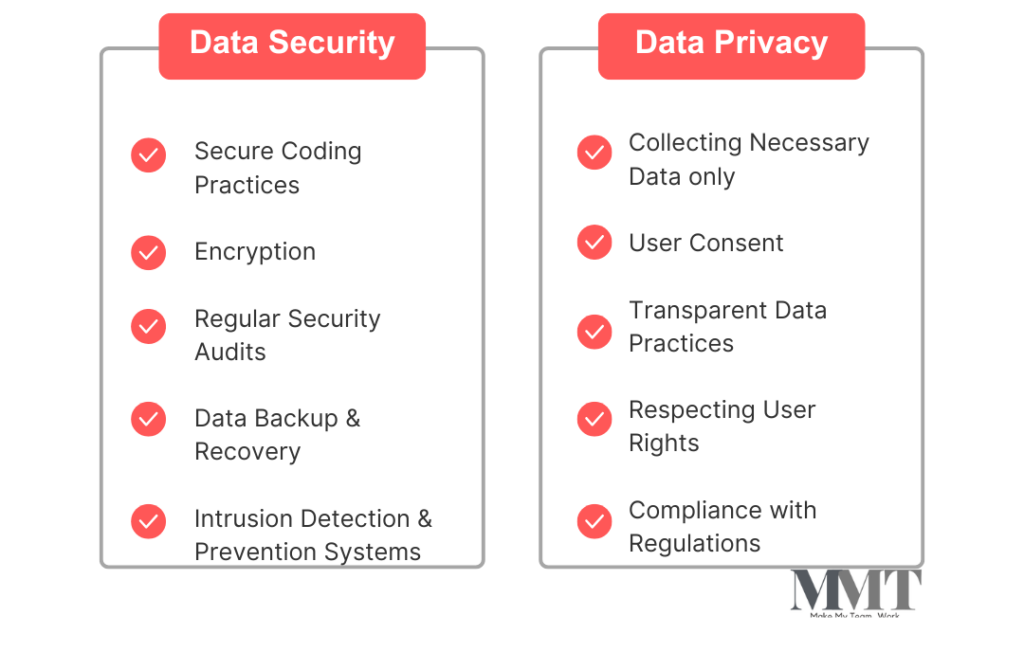
Protecting your app’s information throughout its lifecycle is vital to prevent unauthorized access from malicious third parties, data corruption, and digital theft. Data privacy, on the other hand, ensures that your consumers’ information is handled, processed, and stored correctly. Users have more confidence in using your app if they have control over their data and can trust that you will safeguard their information from breaches.
Compliance with Regulations
Regulatory compliance maintains the integrity of your company, ensuring it operates within legal and ethical confines. The key regulations to be aware of in app development include:
- Intellectual property: Ensure you don’t use unauthorized work from other organizations.
- Data Protection and Privacy: These laws govern how you collect, store, and use personal data from your consumers. They vary by region; for example, the General Data Protection Regulation(GDPR) is designated for some European regions.
- Industry-Specific Regulations: Depending on the type of app you develop, some sectors have additional regulations that you should adhere to. For example, an app relevant to the health sector (that is available in the U.S.) should follow HIPAA regulations.
Following regulations helps reduce risks like financial penalties, protects your reputation, prevents legal issues, and creates a trustworthy environment for your stakeholders.
By prioritizing data security and privacy, you meet legal requirements and create a safe environment for your users, building their trust. Protecting personal information boosts user confidence and fosters a positive relationship with your app, which is essential for its long-term success.
Post-Development Considerations
The development process does not end after your app is deployed. Deployment is a significant milestone that marks a new beginning for your app’s life cycle. Post-launch activities that sustain and enhance the app include:
- Maintenance and Support: Processes that ensure the app remains functional and up-to-date.
- App Updates and Improvements: Updating libraries and frameworks to ensure the app’s performance, functionality, and security.
- User Feedback and Analytics: Gathering user feedback and using it to improve app features to make it more user-friendly.
Depending on the quality of work your development team delivers, you can build a long-term partnership with them for strategic changes and future enhancements. This ensures your app remains relevant and competitive and aligns with market changes.
Looking to hire an app developer? At MMT.work, we’ve already identified the key factors that ensure you get the right fit for your project. From technical expertise to cultural compatibility, we help you make the best choice. Let us connect you with top developers who align with your vision.