
Building a strong startup team is not for everyone, particularly when you have limited resources. Building a strong fractional work team in Australia amplifies this challenge as tech product developers may be drawn to larger, more established scale-ups or enterprises offering more attractive opportunities. Assembling the right team requires finding individuals with the necessary skills and personal traits that align with your founder’s values.
Initially, start-ups need to target individuals who can bring more than one skill set to the table; in a way, they are generalists. For example, some people have experience in project management, product development, and customer acquisition. Each individual plays a crucial role in pushing the company forward. In the competitive landscape of Australia, where startups are vying for talent against both emerging ventures and well-established brands, it is essential to look for people who can persevere through challenges and walk the startup journey with you until fruition.
How to Attract Fractional Work Top Talent in Australia
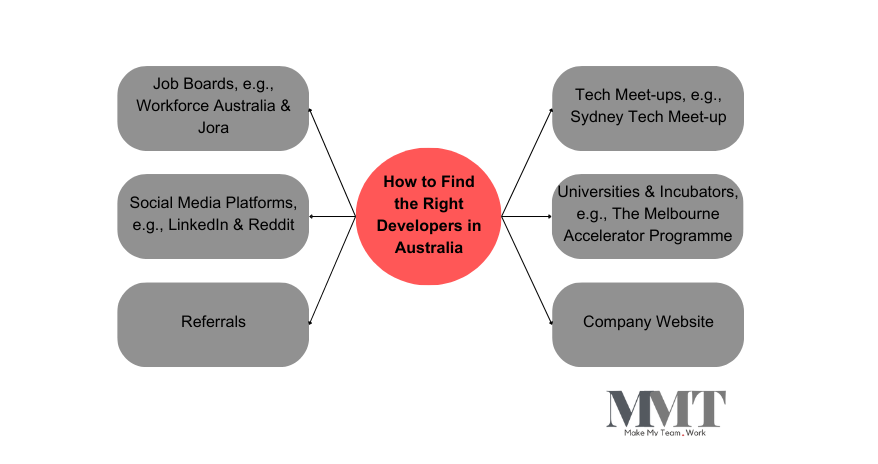
For a startup, finding a good developer is not enough. You also need to hire someone with the right skills to specialise in the specific product you want to build. They should align with your company’s values and vision because this is a significant part of driving it towards achieving its long-term goals. You can find the right developer in Australia by leveraging the following strategies:
- Start-up Job Boards: Post job openings on online platforms and specify the specific developer skill set you need. To narrow down the number of applicants to select from, prioritise Australian-based job boards such as Talent Engine, Climate Salad, and Airtree.
- Tech Meet-Ups: Events that bring together people interested in technology are also a great way to find good product developers. You can have one-on-one conversations with developers to learn about their skills and journey, and eventually find the right person.
- Company Website: Post job openings on your company’s website that reflect the role, requirements, and expectations.
- Social Media Platforms: Many developers share their work on social media platforms, e.g., LinkedIn. Other platforms like Reddit have communities where developers offer advice and share knowledge with others. You can reach out to someone who seems knowledgeable about the product you intend to build.
- Referrals: Referrals are a great way to meet high-quality candidates who have worked with someone (or a company) you know. They have previous experience working with the developer, and recommending them indicates a high level of trust. They can also tell you about the candidate’s skills, work ethic, reliability, and personality from experience.
- Partnering with Australian Universities and Incubators: Australia offers university-startup collaboration programmes that allow startups to connect with student developers from the universities’ network. In rare opportunities, your startup can also receive seed funding by collaborating with universities to recruit or mentor their graduates.
Initiate a smooth, engaging, respectful, and professional process when interviewing candidates. The manner in which they are treated in this stage gives them a glimpse into your company’s culture and shapes a perception of what it would be like working with you. A positive experience makes a lasting impression, while a negative one can lead to high dropout rates.
Remote Work Considerations of a Strong Startup Team in Australia
In the modern work environment, working with remote teams has become increasingly popular because it offers numerous benefits for both employees and employers. Employees like it because it eliminates the need for commuting and grants them autonomy. Hiring remotely is especially advantageous for startups because it saves on operational costs for rent, equipment, and employee benefits–if they hire freelancers. It is crucial to manage and streamline remote teams effectively to ensure productivity and deliver optimal results.

Image by Diva Plavalaguna via Pexels
Managing a Distributed or Hybrid Team
You’ll sometimes find yourself working with a hybrid team, where some members are on-site while others work remotely from different locations. You can also have some members coming into the office a few days a week. Maintaining open and transparent communication becomes crucial to managing the fractional work team effectively if you use this work model. When working with a distributed team, initiate:
- Structured Communication: Establish and agree upon the tools you will use to communicate as a team to minimise confusion and ensure information is easily accessible to everyone.
- Regular Check-ins: Integrate recurring meetings whereby the team provides updates and discusses the progress of product development. Team leaders can also create online groups and send a message to inquire about the progress.
- Asynchronous Communication: Create an online group (for example, on WhatsApp) to allow team members to interact and share information without being available simultaneously.
- Inclusive Decision-Making: Allow every team member to pitch their ideas on how to improve the product and, if possible, accelerate the company towards success.
- Open Feedback: Give your team constructive feedback and allow them to express their opinions, challenges, and concerns. This will help improve team performance.
After streamlining your team and development process, it is crucial to avoid micromanagement. Instead, empower your team, grant them autonomy, and trust in their abilities to complete tasks efficiently. Measure productivity based on results, not the number of hours they work.
Tools and Technologies for Remote Collaboration
Whether you’re working with an online or in-office team, efficient project management is crucial for ensuring that your product development process runs smoothly. The following are five tools you can use to monitor and streamline your workflow:
- Slack: Integrates with different tools, such as Zoom, Google Drive, and GitHub, to streamline collaboration. Team members can also communicate using channels and direct messages.
- Microsoft Teams: Facilitates video and audio calls in addition to document collaboration. It also has Microsoft Planner for task management and planning.
- Trello: A visual task management and project collaboration tool that allows projects to be organised on boards. Each board has lists that specify tasks and allow members to indicate their progress.
- Asana: Allows assigning tasks with detailed descriptions, due dates, and priorities.
- Miro: Uses boards to create visual representations of ideas, processes, and workflows.
Before selecting the platform to use for collaboration, communicate with your team and ensure everyone is comfortable with your selection. For development projects, a tool that supports communication, file sharing, and tracking progress with limited complexities is crucial.
Legal Considerations When Building a Team in Australia
Complying with legal requirements from the outset is essential for the sustainability of your business. Ensuring that your startup adheres to all relevant laws not only protects your company from potential legal issues but also establishes a solid foundation of trust with investors and customers.

Image by Taha Samet Arslan via Pexels
Understanding Australian Employment Laws
Employment laws in Australia vary by state, but they operate alongside the Fair Work Act 2009, which applies to all employers and employees across the country. In addition to this act, other legal statutes specifically impact tech companies and remote hiring practices, for example:
- The Privacy Act 1988: Pertinent for tech companies that handle large amounts of data.
- Superannuation Guarantee (Administration) Act 1992: Requires employers to make contributions on behalf of their employees–even remote ones.
- Independent Contractors Act 2006: Requires fair contracts and provides remedies for the same.
It is crucial to have a clear and well-defined contract that explicitly defines freelancers as independent contractors (if your team comprises freelancers). This distinction with regular employees holds them responsible for managing their financial obligations, including paying their superannuation contributions and other relevant taxes or returns.
Tax Implications of Remote Work in Australia
While starting a business is an exciting and rewarding venture, it also brings with it a range of obligations that companies must adhere to operate smoothly and legally. Here are some considerations to have in mind if you’re setting up a strong startup team in Australia:
- Evaluate the federal taxes owed for your business.
- Register your company for an Australian Business Number (ABN) and a Tax File Number (TFN).
- Withhold tax if you have employees on a payroll –even if it’s Australian tax residents who work overseas, because their income is likely to be considered Australian-sourced. In cases where this is unclear, go through tax treaties between Australia and other countries to acquire more insights into tax payment.
Startup founders should hire a professional to determine which taxes they are required to pay and ensure compliance with all relevant obligations. Tax laws can be complex, and failing to meet your tax responsibilities can lead to significant penalties, which could cripple your business financially.
Work Visas and Immigration Considerations
The Australian government has specific visa and immigration policies that dictate the legal frameworks for hiring non-citizens. Employer sponsors should consider the following four key work visa categories if they’re hiring from overseas:
- Temporary Skill Shortage (TSS) Visa: Allows companies to sponsor workers for up to four years for occupations approved to have shortages in Australia.
- Employer Nomination Scheme (ENS) Visa: Allows companies to sponsor skilled workers to work and live permanently in Australia.
- Global Talent Visa: Designed for individuals highly skilled in specific industries to live and work permanently in Australia.
- Working Holiday Visa: Allows young people from specific countries to travel and work in Australia for a year or two.
For Australian companies looking to hire talent from abroad, it is essential to be fully aware of the requirements, processes, and obligations associated with employing foreign workers.
Employee Contracts and Non-Disclosure Agreements (NDAs)
These contracts define the relationship between a company and its employees. They establish rights, responsibilities, and expectations between parties. Significant components in the contracts include:
- Job Title: The position an individual holds in your company.
- Employment Status: Specifies whether employment is permanent, fixed, or casual.
- Compensation: The figure for which the company is required to compensate a worker and the duration, e.g., weekly, bi-weekly, or monthly.
- Confidentiality and Intellectual Property: An NDA clause related to the protection of company secrets, intellectual property (IP) rights, and non-compete provisions.
These contracts are legally binding agreements, and workers have the right to seek remedies based on the terms outlined within them. Therefore, it is crucial to review contracts thoroughly to ensure all clauses are clear, fair, and comply with relevant laws.
Legally protecting your startup should be a top priority because it lays a foundation for the company’s long-term success and stability. It is highly advisable to work with a professional, such as a lawyer, accountant, or business consultant, who can guide you through the complexities of business law if you’re not well-versed in the legal aspects of starting a business.
They can help you navigate contracts, tax obligations, employment laws, and other legal considerations, ensuring that your startup is well protected from potential legal issues down the line.
Summary
Here’s a brief look at the key points to consider when assembling your team and navigating the startup landscape in Australia:
- Startups should target individuals with a broad skill set who can step into different roles and tackle different challenges while contributing to the company’s future.
- When looking for talent, use strategies like posting on startup job boards, attending tech meet-ups, leveraging social media, and seeking referrals.
- Embracing remote or hybrid teams can save office space and equipment costs while offering flexibility.
- Proper contracts and an understanding of tax obligations are essential for legal protection and smooth operations. Be aware of Australian employment laws, e.g., the Fair Work Act and Privacy Act.
- Utilise tools like Slack, Microsoft Teams, Trello, Asana, and Miro to manage your project.
- Carefully examine Visa options if hiring from abroad.
Building a strong startup team requires a careful and strategic approach. Your team, project alignment, and abiding by relevant laws play a crucial role in the success or failure of your first project, which translates to your startup’s performance.









[…] I’ve been in a position where I hired people to save costs, only to spend countless hours teaching a freelance developer how to solve problems, write quality code, and deliver excellent work. When you hire a knowledge worker, you pay for their skills, expertise, and experience. Doing their job for them is a surefire way to foster an unproductive culture and hinder progress within your team. […]
[…] Tai took an interest in the project. Although he initially declined to invest due to the lack of a strong tech team, he connected Perkins with the right people and later became an investor. Canva officially launched […]
[…] Diverse Perspectives: Encourage your team to share their ideas because different people have different viewpoints. Regardless of their […]
[…] components. This requires technical proficiency and the ability to work effectively in a team in order to resolve potential integration issues. Thus, while technical skills are paramount, a […]
[…] to your specific needs. With MMT, you can schedule a call, provide details about your project, and get a skilled and qualified team that meets your requirements. Other platforms include Upwork, Fiverr, and Freelancer, which connect […]
[…] to your specific needs. With MMT, you can schedule a call, provide details about your project, and get a skilled and qualified team that meets your […]