

Minimum viable products (MVPs) that successfully transformed their market are big tech companies we know today, such as Facebook and Dropbox. These companies started their journey by building a product with just a few features that addressed the problem faced by their early customer profile.
After gaining traction with their MVPs, they further built and scaled their products to become disruptive forces that transformed entire industries.
We will examine how Uber, Airbnb, and Dropbox started as MVPs but became the big corporations we know today. A careful evaluation of the journey of these companies will help you gain valuable insights on how to practically apply MVP principles in your software development journey and come out with a product that exceeds the expectations of your target audience, attracting thousands, hundreds of thousands, and even millions of users.
What Key Features should an MVP Have at Launch?
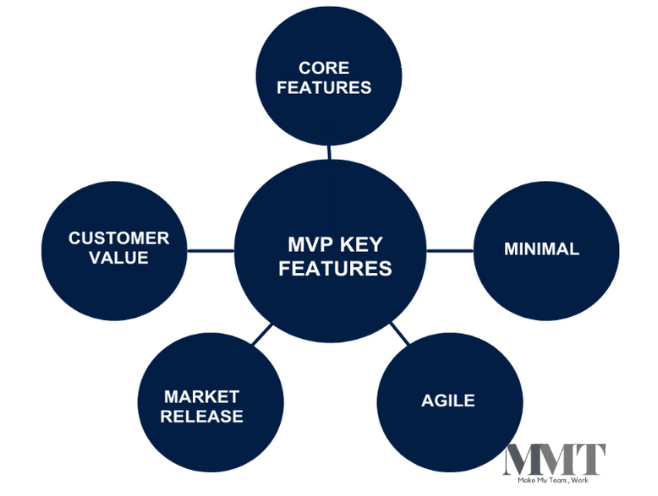
An MVP is a basic version of a product that solves a problem faced by your target audience, especially your early customer profile, with just enough functional features that early adopters can use. Outline the typical characteristics of an MVP, including simplicity, focus on core functionality, and ease of use. In its initial launch, an MVP should:
- Offer value to your early target audience by solving a specific pain point they face,
- Contain the core features that solve this paint point,
- Follow the rule of ‘least amount of effort’ by using minimal labor, time, and financial resources,
- Be released to early adopters for testing and validation through user feedback and,
- Be agile, whereby your team delivers versions of working software frequently through iterative development.
The essence of developing an MVP is to test the viability of your solution in the market by ensuring there is demand and gathering feedback from early adopters to continuously improve your product and maximize the value it offers to your target audience.
Detailed Case Studies of Successful MVPs
Case studies are essential in helping you gain an understanding of the role MVPs play when developing a software product. Analyzing the journeys of successful companies gives tangible proof that MVPs work. Looking at their journeys also helps you understand the challenges MVPs face and how to navigate them in order to build a successful product. We will look at how Dropbox, Airbnb, and Uber got to where they are today.
Case Study 1: Dropbox
Dropbox was founded by Drew Houston in 2007 based on the hypothesis that people were willing to store their files on the cloud as opposed to USBs. Its MVP was a basic synchronization tool, which underwent numerous refinements and improvements to become a product that many people were willing to pay for and use. Today, Dropbox is the second-largest cloud-based file-sharing and storage system after Google Drive, with more than 700 million registered users.
Initial MVP concept and development
Houston conceived the idea during a bus ride after he forgot to carry his USB, which held his files. He thought of a cloud-based file storage system that allowed people to access their files from anywhere. This led to the creation of a prototype, but it was not ready for public launch because he had yet to figure out how to synchronize it with different operating systems.
Therefore, he created an explainer video and posted it on Hacker News, which he also used as an application to Y Combinator. The explainer video is often deemed as Dropbox’s MVP because he used it to gauge people’s interest and determine whether they faced a problem similar to his. It also explained what Dropbox was.
It attracted early users and also got him into Y Combinator’s accelerator program on the condition that he needed to find a co-founder in two weeks. He approached Arash Ferdowsi, a student at MIT, who agreed to become his co-founder. They received seed funding from Y Combinator and built an early version of the product. It addressed the following needs;
- File synchronization across different devices,
- A simple user interface that allowed easy navigation and,
- Simple security measures to ensure data protection during the transmission and storage of files.
After launching the MVP, they tried different marketing strategies, such as Google Ads and a public relations firm, but this did not work. Therefore, he made a second explainer video that was posted on Reddit and Digg. The video, which was published on April 5, 2007, contained a form for a wait list for private beta users.
It grew the beta waiting list from 5,000 to 75,000 overnight and the subscribers grew to more than 200,000 by the end of 2008. Dropbox used feedback from its beta users to determine essential files and what they needed. The MVP underwent iterations and released updates in cycles based on feedback from beta users.
Growth and scaling process
The strategy used to gain early adopters for Dropbox worked, and it was time to scale and gain more subscribers. Houston made a third explainer video focused on a wider audience. The growth and scaling process involved;
- A landing page that directed users to subscribe to Dropbox through the website,
- A referral program whereby someone gets free space if they refer another person to sign up for Dropbox. The new user would also get free space,
- Allowing people to share files with non-Dropbox users. Once the user clicked the link, they were directed to open a free Dropbox account.
- Allow collaboration whereby users who had access to a file could read and edit projects within the file.
The scaling strategy used by Dropbox accelerated its growth. By the end of 2009, it had more than 4 million registered users.
Impact on the file hosting market
Dropbox had a significant impact on the file hosting and cloud storage market. A major industry shift occurred after the success of Dropbox. Other companies also launched file hosting services using cloud storage. For example, Apple launched iCloud in 2011, Google launched Google Drive in 2012, and Jumpshare was founded in 2012.
Dropbox’s journey from a simple unusable prototype to an MVP explainer video and eventually a major technology company reinforces the power of starting small and growing based on user feedback in product development.
Case Study 2: Airbnb
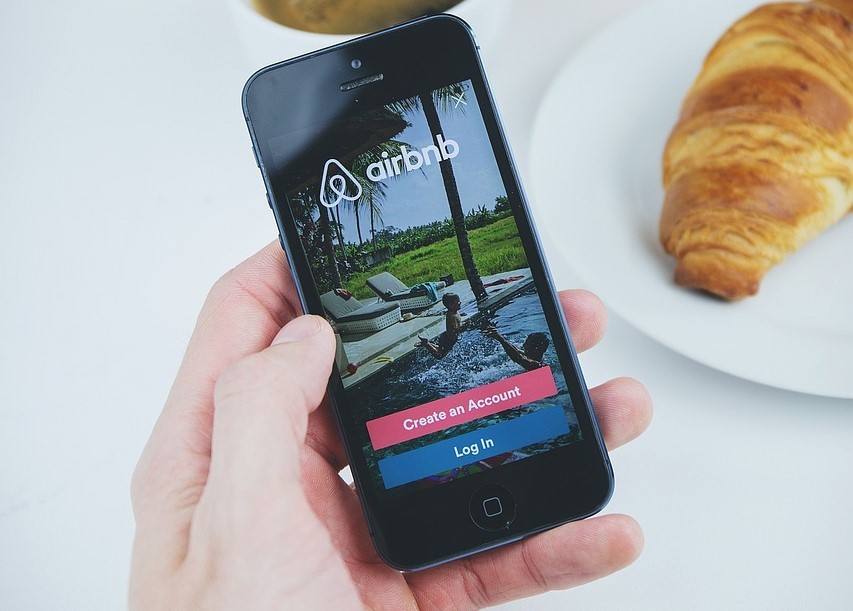
Airbnb, founded in 2007, is one of the biggest key players in the reservation and online booking industry. It holds a market share of 30%, coming second to Tripadvisor. In 2023, the company had close to 450 million bookings. Understanding Airbnb’s growth journey is essential in guiding people dealing with tech products on the importance of starting small.
Airbnb’s MVP and growth journey
Two product designers, Brian Chesky and Joe Gebbia, came up with the idea of Airbnb after observing how hard it was to obtain reasonably priced hotel rooms in the city. They noticed that conferencegoers needed places to stay at affordable prices. They put their concept to the test by charging for accommodation in their room, which included breakfast, Wi-Fi, and a mattress, without relying on third parties.
The creators collected data and feedback from their clients and used it to build Air Bed and Breakfast, Airbnbs’s MVP. The MVP only allowed tech conference attendees to reserve a booking for Chesky and Gebbia’s room, and three people agreed to pay $80 a night. People’s willingness to pay validated the buyer side.
This set the pace for the next phase, determining whether people were willing to rent out their spaces to strangers. At this point, the target market was hosts located near high-profile events. The platform added more features that allowed hosts to list their space, and the target audience also responded positively. The MVP underwent iterative development based on user feedback;
- Providing more information to help travelers know about their travel destination,
- A secure fee method,
- Hosts taking professional photos of their properties and,
- Allowing users to leave detailed reviews on their experience in the properties they stayed at.
Iterative development enhanced the willingness of people to use the services offered by Airbnb. This shaped Airbnb’s future and indicated it was ready to scale for global success. The scaling process started by targeting different cities in the U.S., and then global expansion across different continents. The company also expanded from hosting people with rooms and apartments only, to villas, hotel rooms, boats, etc. Today, the company has more than 150 million registered users.
Transformation of the hospitality industry
Airbnb caused a significant shift in the hospitality industry. In the traditional market, people primarily stayed in hotels and other commercial spaces. Airbnb came up with a B2C model that allowed people to rent out their personal spaces to customers. Furthermore, hosts were free to charge whichever price they deemed fit for their property, which entirely disrupted the hospitality industry because people could find affordable spaces.
Other companies with relatively similar operation models also came up, such as Onefinestay, which was founded in 2009. Also, companies that existed before Airbnb, such as Marriot and Booking.com, had to change their operation models to allow customers more freedom to choose properties to stay at while offering different pricing options.
Airbnb’s journey shows that MVPs play a crucial role in transforming a product idea into a successful business. In the early development stages, the priority should be to build a product with minimal features and allow users to give their opinions on what is fine, what should be improved, and what should be added.
Case Study 3: Uber
Uber has more than 7 million drivers and more than 150 million users. Similar to Airbnb and Dropbox, Uber also started with an MVP program called UberCab in 2010. The initial MVP was launched as a high-end taxi service in San Francisco by Travis Kalanick.
Concept and MVP creation
Kalanick had come from a night out with Garrett Camp, his cofounder, and they hailed a taxi. They alighted the taxi mid-way because the driver complained that they were too excited. It was challenging for them to get a cab afterward, and this is where the idea of Uber was conceived. They agreed that they needed an innovative solution to address an issue for people who would face a problem similar to theirs.
They had different approaches to implementing this solution because Garrett suggested purchasing a fleet of vehicles to carry people around. Still, Kalanick thought a peer-to-peer (P2P) approach was more realistic. They opted for the P2P approach, the model that Uber uses today.
Uber then launched its MVP, UberCab. They approached limo drivers in San Francisco, and 30% agreed to use the service. It was also necessary to test reception on the demand side. They did this by offering a lower pricing model for their clientele compared to those offered by other limousines. This created customer value. The MVP also allowed customers and drivers to leave feedback so they could improve features the MVP’s features. The reception on both the demand and supply side was overwhelmingly positive, allowing Uber to scale quickly.
Growth strategy and market impact
The company was able to scale quickly and started targeting the general market. By 2011, Uber was operating in 8 cities. The founders targeted regions with a high demand for taxi drivers. Eventually, uber expanded to different regions in the U.S. and started targeting the global market.
Uber experienced regulatory challenges because the laws of different regions differ. It overcame these challenges through public relations campaigns that fostered good relations between the multinational corporation and different countries. Uber also has a strong value proposition for creating numerous employment opportunities. Uber is present in 70 countries today.
How Uber changed the transportation industry
Uber was a disruptive technology that caused a major shift in ride-hailing services. In the traditional operation model, people had to walk a certain distance or directly contact a taxi driver to pick them up. With Uber, they could hail these services using their phones and get picked up at their exact location.
Uber also popularized the gig economy, which takes the form of freelance work. Uber drivers have the freedom to work the hours they desire and take time off as opposed to the traditional model where employees had to work for a specific number of hours. Uber drivers are considered independent contractors.
Uber’s success story shows the importance of starting your product idea as an MVP. Uber started by targeting limousine users in one location, and after determining that demand existed, it started its growth journey.
Many people don’t believe that starting with something small is the best way to create a product that will one day attract many consumers. However, the growth journey of Uber, Airbnb, and Dropbox shows that not only is this possible, it is the best way to develop and grow your product. When you conceive an idea, you should use the MVP approach because it allows to start with something small that saves up on costs and grow it realistically using feedback from real users.
Key Takeaways from Successful MVPs
The key takeaways from studying the journey of Dropbox, Airbnb, and Uber help us understand how to navigate the MVP development journey. These companies went through many challenges but still succeeded. The same can happen to your product. Lessons from these companies help startup founders and companies in software development apply practical concepts to their own journeys.
Common traits of successful MVPs
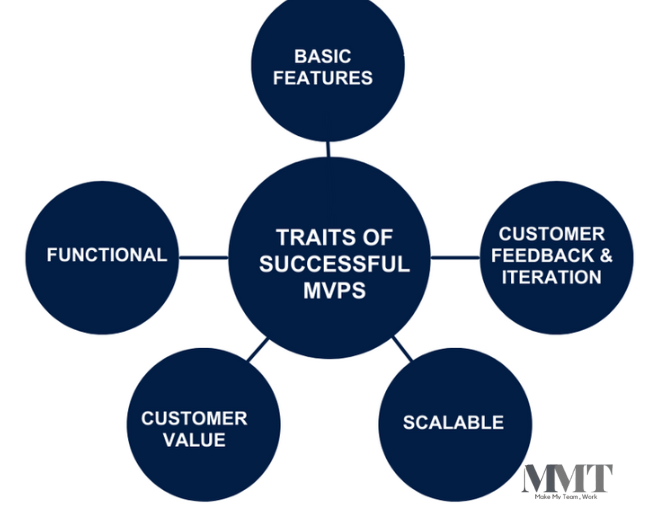
The Dropbox, Airbnb, and Uber case studies reveal common characteristics among MVPs. An MVP should;
- Only contain basic features that solve a customer’s pain point,
- Be functional and allow users to accomplish the intended task,
- Offer customers value and allow them to benefit from using the product,
- Use customer feedback for iterative development and,
- Be scalable. An MVP should be able to handle growth.
Dropbox, Airbnb, and Uber started with simple MVPs that did not contain too many features. The features available only allowed users to solve their pain points. These companies also relied heavily on user feedback to refine their product.
Lessons learned from failure and success
Dropbox, Airbnb, and Uber experienced various challenges in their MVP development stages. However, they overcame these challenges and became the big tech companies that we know today. Here are some lessons learned from their challenges;
- Build a basic product because your MVP will undergo numerous changes to refine it,
- Prioritize gathering user feedback and use it for iteration,
- Use proper channels to market your product because every product has a different target audience. For example, Google Ads did not work for Dropbox, but Reddit did, and,
- Learn from your consumers by using their feedback to iterate. After all, they are the people who will be using your product.
Challenges and failures are common aspects of MVP development. When you encounter hindrances, do not let it discourage you. Rather, use it as a lesson learned so you understand how to do something better and eventually build a successful product.
The journey of Dropbox, Airbnb, and Uber shows how a product idea can grow from something minimal to a successful company. A significant lesson learned is to always start small; for example, Airbnb started with a small room in an apartment and three customers. When you’re building your tech product, start with something that only contains core features and rely on user feedback to improve it.
How can startups ensure their MVP will succeed?
To enhance the likelihood of your MVP succeeding, ensure that your product offers your target audience value. You should also ensure that the user experience is great so your consumers don’t get frustrated when perfoming tasks on your product.
What role does user feedback play in the success of an MVP?
User feedback is crucial for the success of an MVP. Users are real people who have actually interacted with your product. They have a great understanding of what works within your product and what needs improvement. User feedback also helps you gain valuable insights on what your audience expects from your product, and you can improve their experience.