


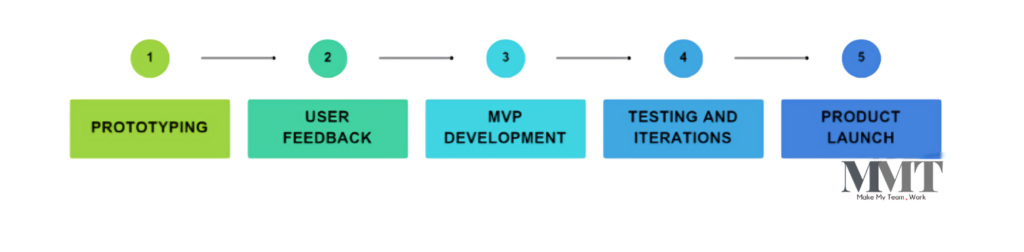
Full-scale prototypes and minimum viable products (MVPs) accelerate startup launches by allowing them to test their assumptions, gather user feedback, and polish their products. Full-scale prototypes and MVPs help accelerate startup launches by allowing them to create a small product version before committing to full-scale production and making significant financial commitments.
An MVP contains a minimum set of features to demo and sell the product while gathering feedback to refine it. A full-scale prototype, on the other hand, is a design that shows the flow of that product. A full-scale prototype informs and guides the development of an MVP and accelerates startup launches by providing a clear development roadmap.
Understanding MVP (Minimum Viable Product)
An MVP is the basic functional version of a product with core features that solve a problem for your target audience. Its essence is to validate your idea by releasing it to early adopters, reviewing their feedback, and making iterations to enhance the value of your product. An MVP will help you gather user feedback before investing too many resources in a product whose success is not guaranteed.
Understanding Full-Scale Prototypes
Full-scale prototypes are high-fidelity interactive models that demonstrate the functionality of your final product. The purpose of a full-scale prototype is to have a functioning model of your product so you can test all the features comprehensively before a broader launch.
Consider it as a realistic environment for your idea because it mimics the tech product you aim to build with little or no coding involved. In short, nothing happens in the background of a prototype, but it allows interactions to determine your tech product’s usability, feasibility, and functionality.

How Full-Scale Prototypes and MVPs Help Launch Products Quickly
A prototype clarifies the product vision and helps obtain early user feedback, ensuring the design and functionality align with user needs. This preliminary testing helps uncover potential issues and minimizes risks, allowing you to establish and refine key features before building an MVP. A concrete prototype also sparks stakeholder interest, making it easier to secure support and funding.
This eases your development process and ensures the transition to an MVP is more focused, allowing quick iterations and an efficient timeline. Using a prototype to inform an MVP provides a clear route from concept to market, enabling a faster and more effective launch.
Benefits of Using a Full-Scale Prototype for Quick Product Launches
A full-scale prototype mimics a real product, and users can interact with it on their devices. It is beneficial to a startup for faster launches because it:
- Visually represents your product idea before going into development by showcasing its design, user interface, user interaction, and user experience,
- Clarifies essential features, which streamlines the development process, and,
- Validates ideas quickly before going into full development.
Startups can gauge investors’ interest early by reducing their perceived risks about a product using prototypes, which demonstrate that an idea can turn into a working model.
Benefits of Using an MVP for Rapid Launch
The phrase “when less is more” applies to the MVP approach because it accelerates rapid launch. The MVP approach is advantageous because:
- You minimize the risk of developing a full-fledged product because you only focus on the core features,
- You validate your idea early by releasing the product to the market and examining the response from your target audience, and,
- Feedback from early users is used to iterate your product and enhance its value to consumers, increasing its market viability.
MVPs are the safer option for full-fledged products because they require fewer resources while allowing you to ensure the product meets customer needs early in the development cycle.
Validation and Testing for Rapid Iteration
User feedback is central in testing and validating a product idea. Testing assesses the product’s functionality and usability, while validation determines whether it meets user needs and expectations.
Prototyping for Faster Problem Solving
Prototyping helps identify potential issues with a product before it’s developed. Your team can identify design flaws and usability issues by simulating user journeys (or using real users). The process reveals navigation issues and unappealing user interfaces by testing how features perform in real conditions. By starting with prototypes, you can identify and solve problems early, reducing the risks of developing a flawed product.
How MVPs Speed Up Validation and Iteration
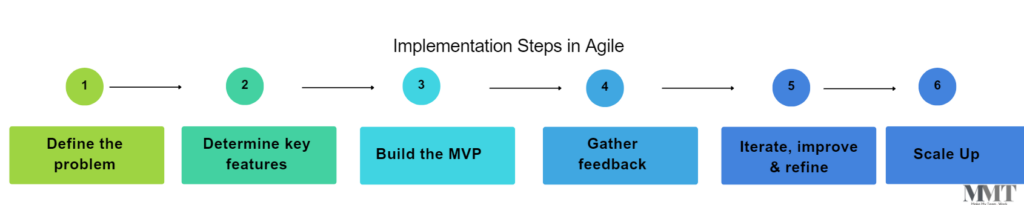
An MVP only contains essential features that address users’ core needs, allowing fast development instead of building a full-fledged product. An MVP is a key agile methodology concept, emphasizing flexibility, collaboration, and iterative development. The concept emphasizes:
- Fast development–which is made easier and seamless by prototyping,
- Fast release to the market,
- Gathering feedback from early adopters and,
- Rapid iterations based on user input.
Iterative development allows your team to make informed decisions on which features to prioritize and modify, allowing quick adjustments and refinements, hence building a product that resonates with users.
Testing and validating prototypes and MVPs is crucial because it helps your product achieve its desired purpose by ensuring functionality, desirability, and customer value.
User Feedback: The Key to Fast and Effective Product Refinement
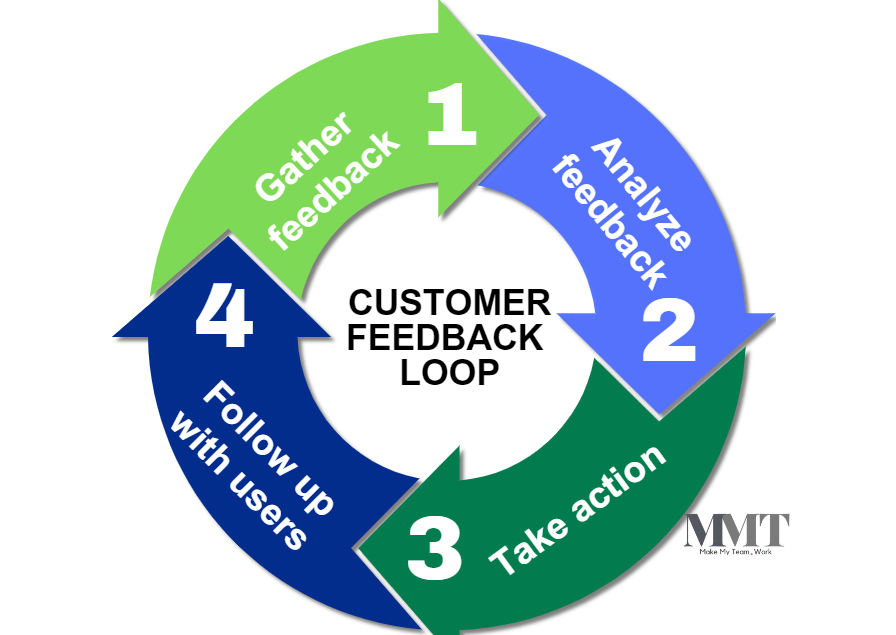
User feedback is key to product development because it ensures you build something that genuinely serves your audience. By relying on input from real users, you develop an appealing and acceptable product that satisfies their needs. You should subject your product to a feedback loop, which is a continuous cycle of learning and improvement based on real-time input from users who interact with it.
Importance of Rapid User Feedback for MVPs and Prototypes
User feedback plays a crucial role in iterative development. It provides invaluable insights into what users need from your product, their preferences, and what you can do to improve their experience. Feedback is used to refine and improve the product through iterative development, which is continuous throughout the development cycle to ensure you attain a product with acknowledged business value.
Methods for Gathering and Using Feedback Efficiently
A tech product is tested and validated through user feedback, which is then used for iterative development. Methods used to gather user feedback include;
- User testing by monitoring how real users interact with the product and whether they complete tasks on it,
- Advertising your product to determine how many users engage and pay for it.
- Conducting surveys to get honest feedback on your product from real users,
- Conducting interviews by talking to people who have interacted with your product and getting opinions, and,
- User reviews whereby people who use your product can review it on the Play Store, App Store, website, or any other medium you are using to host it.
Data and information gathered from users are used for analytics to identify patterns and trends, aiding in informed decision-making. These insights help you make iterations and refine your product to make it more desirable to your target audience.
User feedback plays an integral role in testing and validating MVPs and prototypes. It helps improve user experience and the overall value of your product, enhancing its viability in the market.
Leveraging MVPs and Prototypes to Secure Investment
Securing investment is crucial because it makes building, refining, and marketing your product easier due to the availability of adequate resources. Many successful products we have today, such as Facebook, YouTube, Twitch, Dropbox, etc, secured funding in their prototype and MVP stages. Getting investors helps you cover costs for development, marketing, scaling, and other associated needs.
How Both Approaches Can Attract Investors
MVPs and prototypes play a significant role in attracting investors because they demonstrate concept viability. MVPs and prototypes undergo rigorous testing and validation to enhance a product’s viability in the market. It is easier to convince investors to put their funds into a validated product because they have proof that it works, enhancing their confidence in its potential success.
Success story on using MVPs to Secure Funding: Facebook’s MVP
Facebook’s MVP, known as Thefacebook, was launched in 2004. Membership was initially restricted to Harvard students to allow them to connect and post messages on their boards. The MVP’s popularity increased, and other schools quickly adopted it (validation). By 2005, more than 25,000 schools across the world were using Thefacebook. It was also named Facebook in the same year. In September 2006, it was opened to the public as long as someone was over 13 years old and had a valid email address.
After a few schools adopted it, Facebook received its first angel investment of $500,000 in 2004. It received its second investment of $12.7 million in 2005 as more schools adopted it. In April 2006, it received an investment of $27.5 million. Facebook’s journey shows how an MVP is used to attract investors. Despite being confined to a few schools, investors still had confidence in its potential for success because it had scaled from Harvard. The investment amounts also increased over the years as the company illustrated more and more potential for growth.
Securing funding for your product idea early in development propels its success. MVPs are essential in attracting investors for your tech product by demonstrating its functionalities, milestones, and ROI. As seen in the case of Facebook, MVPs also attract further interest from other investors.
Best Practices for Startups Using Full-Scale Prototypes and MVPs
Startups can leverage full-scale prototypes and MVPs for efficient product launches by:
- Using a full-scale prototype to show the flow of their product,
- Engaging users early in the development process to help shape their product,
- Building an MVP after demonstrating functionality and usability in the prototyping phase,
- Integrating agile methodologies for iterative development and,
- Learning from user feedback to understand what they value most about the product.
Prototyping maximizes the speed of MVP development without sacrificing the quality of your product.









[…] Beachhead strategy: Dominate one hyper-specific group first, then expand. For example, FaceBook started at Harvard, moved to Ivy Leagues, all colleges, and then the […]
[…] process, building, and testing your MVP easier. You require proper tools and resources to grow your product idea from conceptual to launch. Various tools used in MVP creation […]