


The advantages of hiring remote developers range from access to talent not accessible in your location to replacing the talent when existing talent resigns to the cost of getting work done. The advantages of hiring remote developers allow companies to transcend regional hiring restrictions, particularly in situations where the supply of talent falls short of the demand for specialized skills and expertise needed to develop specific tech products. Hiring remotely allows you to foster a highly innovative, cost-effective, and flexible development process.
What is Remote Development?
Remote development is a model in which you hire developers outside a traditional office setting. The developer can be in the same region or a different country. The three main types of remote work models include:
- Fully Remote: The developer(s) works from a location of their choice without coming to the office. Communication and collaboration occur online by leveraging digital platforms and tools.
- Hybrid: The developer(s) works from a location of their choice but also comes to the office at agreed-upon times.
- Flexible Hours: They choose their working hours but also ensure they meet your project deadlines. Many freelancers utilize this model.
No matter which model you use with your development team, ensure you set clear goals and expectations and develop metrics to help you assess whether these expectations are being met.
Why Consider Hiring Remote Developers?
28% of the global workforce is remote, a 400% increase in a decade. This impressive growth is an indication that there are compelling reasons behind it. Let’s look at why remote hiring has become a critical employment factor.
Access to a Global Talent Pool
Hiring remote developers allows businesses to access talent beyond their local boundaries from a diverse pool of qualified and experienced individuals. You can benefit from hiring remotely by:
- Accessing niche expertise: Remote developers have specialized knowledge in specific areas of product design, development, and technology. They offer targeted solutions that help build products that stand out in the market.
- Acquiring custom product development services: Some companies require unique products not offered by generic off-the-shelf solutions. Remote developers can build tech products tailored to meet your specific requirements. Custom mobile apps, e-commerce platforms, and enterprise solutions are examples of customized solutions you can acquire from remote developers.
- Gaining local insights: Economic demands are changing rapidly, forcing companies to adapt and turn to global markets. Remote teams have the added advantage of diverse perspectives. You can learn about the market conditions of different regions from your remote hires, making it easier to access new markets and cater to a broader audience.

Image by StockCake
Beyond accessing a diverse workforce, you can benefit from hiring remote developers and gain insights from new markets aiding business development.
Cost Efficiency
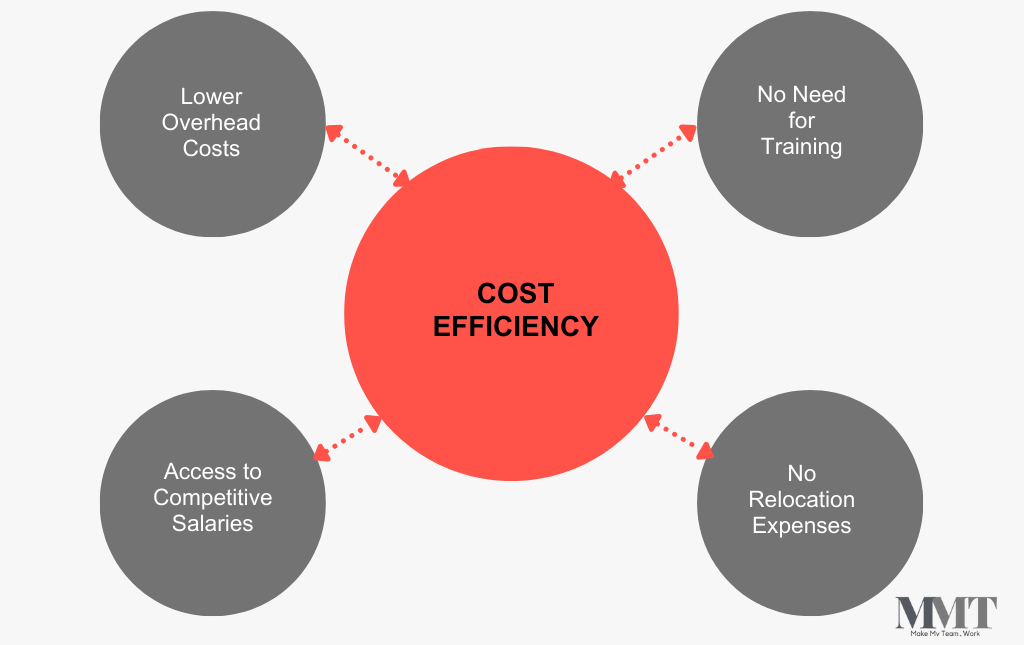
Running a business on-site every day is costly. Hiring remotely saves companies up to $11,000 annually for every employee, and accounting for other costs, they can reduce their costs by up to 80%. You can save costs by hiring remote developers due to:
- Reduced overhead costs: A remote team saves the costs you spend on office space, utilities, business travel, insurance, etc.
- Competitive salaries in different regions: You can hire developers at lower costs because salary benchmarks differ from one region to another, depending on economic conditions, cost of living, and industry standards. For example, the average hourly rates of developers in Southeast Asia are $25-45 and $25-130 in North America.
- No relocation expenses: When you hire a remote team, you can minimize the logistical expenses associated with moving your business and employees from one region to another.
- No need for training. Remote developers constantly upskill to help them stand out and remain competitive so they can acquire clients. Companies spend an average of $1,000 per head to train their in-house teams, and hiring remotely saves these costs.
Hiring remotely is especially suitable for tech startups since most have limited funding and face financial constraints. For a young company, it is easier to have a lean budget by reducing operational costs.
Increased Flexibility
Flexibility is essential to your project’s success because it facilitates the consistent organization of tasks while granting your team reasonable freedom. By working with remote developers, you can:
- Scale team sizes up or down quickly based on your project’s needs,
- Maximize productivity by leveraging flexible working hours. A team with developers from different regions can submit their tasks around the clock since they are not constrained to a single timezone, and,
- Incorporate agile development more efficiently with your developers, focusing on different aspects of your project due to a more flexible workflow.
You can foster an adaptable and responsive development process by hiring remote developers from different regions.
Enhanced Productivity
53% of companies in the U.S., the U.K., Australia, and Canada report increased productivity from their remote employees. Working with remote developers can enhance productivity due to the following:
- They save time and energy spent on commute, allowing them to focus on your project,
- Developers can work at preferred hours when they feel highly energized,
- Individual focus is stronger because interruptions that come with working in the office are lower.
The more productive your team is, the more they deliver efficiently, leading to a successful project outcome.
Work-Life Balance
Working remotely gives developers more control over their schedules, allowing them to balance their professional and personal lives. Job satisfaction is higher, and turnover rates are low. This enhances the team’s commitment to your project, ensuring timely delivery and completion.
Innovation and Diversity
You can access developers with specialized skills and creative thinking by tapping into global talent. These developers also come with diverse perspectives since they are exposed to different environments. Your project’s ecosystem is simulated by innovative thinking and creative problem-solving approaches that lead to a positive outcome.

Image by Gerd Altmann via Pixabay
Environmental Impact
A company’s commitment to ethical practices positively impacts its reputation. Remote hiring is one of the ways tech companies can engage in sustainable operations that reduce the carbon footprint in our environment because:
- Remote developers can work from home, which lowers carbon emissions caused by commuting,
- Office resource consumption, e.g., paper and energy, is lower, and,
- Remote workers are free to work in ways that align with their sustainable values, such as using solar power instead of electricity at their home offices.
With increased eco-conscious consumers, you can differentiate your company in the competitive tech landscape by engaging in sustainable practices. This shows your consumers you are forward-thinking, enhancing your company’s positive brand image.
Hiring remotely presents a strategic opportunity to access a depth of multinational talent—perhaps unavailable in your vicinity–while saving on costs.
Conclusion
Remote development is a viable and strategic option for tech businesses. While you can find good developers in your local market, trying the global talent pool allows you to find the right match for your product development journey. It also comes with the added advantage of cost-efficiency, which is vital to many businesses.
FAQs
Are Remote Developers Less Productive than In-House Developers?
A common misconception is that remote workers are less productive due to minimal supervision. However, as we’ve learned, companies have reported increased productivity among their remote employees. The truth is that the productivity of remote and in-house developers varies due to different factors, e.g., team dynamics, work ecosystem, etc.
What are the Best Practices for Onboarding Remote Developers?
Communicating expectations clearly to developers, initiating regular check-ins to provide support and get feedback, and mentorship are best practices that help you build a cohesive and productive remote team.
Can Remote Development Teams Work Effectively on Complex Projects?
Remote teams can work effectively on complex projects if they have the proper skills, expertise, and experience to handle them. Team alignment is also essential because it enhances engagement and streamlines processes, leading to successful outcomes.










[…] target audience, create a simple user persona and get specific. Are you targeting busy parents, remote developers, early-stage founders, Gen Z students, or vintage sneaker resellers? What are their habits, pain […]
[…] hiring a developer, it is essential to determine whether they have the specific knowledge and abilities required to […]
[…] hiring a developer, reiterate your needs and establish a shared understanding of your vision and expectations to […]