
An offshore team operates and collaborates effectively on projects by first establishing positive relationships and fostering a culture of trust. An offshore team operates and collaborates effectively on projects by building a strong foundation that enables team members to work seamlessly toward shared goals and objectives, regardless of geographical distance.
Regular check-ins are initiated to ensure continued engagement and productivity while utilizing collaborative tools, cultivating a culture of continuous communication among team members.
Typically, a product or project manager plays a central role in overseeing the team and project’s progress by setting clear expectations and timelines.
These managers also provide continuous support, guide the team, and resolve any challenges encountered throughout the development cycle. This leads to team alignment and creates a cohesive and efficient work environment, enhancing a project’s success.
How Does an Offshore Team Operate?
An offshore team generally consists of members in different geographic regions, often spanning various time zones. The composition varies depending on the company’s needs, with teams including onshore and offshore members working in tandem to leverage a broader range of expertise and resources. These teams typically operate under two common operational structures:
- Hierarchical structures: Have multiple levels of authority, with clear distinctions between senior, mid-level, and junior roles. The chain of command is clear–decisions are made at the top of the hierarchy, and information flows downwards. It is common in medium-sized firms and big corporations.
- Flat structures: They have fewer authority levels and less rigidly defined roles. There is a high level of individual autonomy due to less distinction between management and non-management. The structure is common in startups and some small-sized firms.
Regardless of the operational structure, offshore teams typically require a shared platform that enables seamless online collaboration and communication. They leverage tools that centralize communication, project tracking, and document sharing, ensuring all members stay aligned and informed.
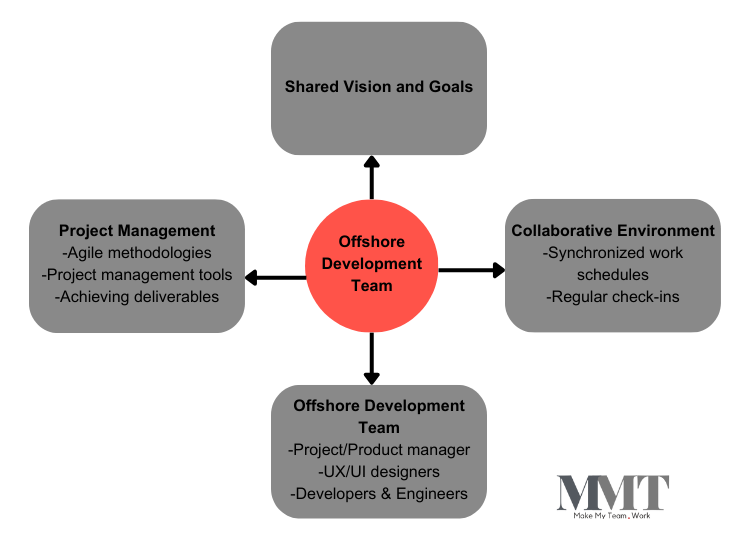
What Are the Key Roles in an Offshore Team?
The key roles in an offshore development team are often influenced by a company’s scale and resources. Startups, small to medium-sized businesses (SMBs), and corporations hire different key roles depending on what they can invest in the offshore team. Startups often have a team of four–at least two developers are recommended—while larger companies can take on bigger teams.
Project Manager
A project manager is the key figure responsible for steering a project towards its desired outcomes by ensuring the team’s efforts align with the project’s goals at every stage. They have the following responsibilities:
- Project Planning: Defining the scope, objectives, timelines, and deliverables.
- Team Coordination: Managing communication and facilitating meetings.
- Monitoring: Tracking the project’s progress and managing deliverables.
- Stakeholder Management: Reporting the progress to stakeholders such as product owners.
- Resource Management: Ensuring that the project operates within the stipulated budget.
Throughout the project’s lifecycle, a project manager should maintain a sharp focus and adjust strategies as needed to keep the project on track.
UX/UI Designers
UX/UI designers apply human-centered design principles to create engaging products that resonate with users at deeper levels. The roles in product development include:
- Conducting user research to understand their needs, behaviors, and preferences,
- Prototyping and wireframing,
- Defining the information architecture of a tech product to ensure easy user navigation,
- Designing the aesthetics and visual elements of a product to make it appealing to users and,
- Collaborating with front-end developers to implement design.
UX/UI designers should possess a deep understanding of user psychology to empathize with users and design products effectively so they can easily navigate with minimal friction. They make the product easy and enjoyable to interact with.
Developers and Engineers
Developers and engineers are in charge of the technical aspects of a product. They transform a client’s vision into a functional system, software, or tech product through:
- Prototyping: Creating a representation of an early version of a product to test and validate the idea before building a Minimum Viable Product (MVP) or going into full-scale production.
- Writing Code: Writing clean, high-quality code that adheres to coding standards while using the appropriate programming languages, frameworks, and tools to implement desired functionality.
- Testing and Quality Assurance: Identifying any issues and fixing bugs and vulnerabilities to ensure the product is functional, reliable and secure.
- Iteration: After the product is launched, they continue working on it, fixing bugs, and implementing new features based on user feedback.

Image by Christina Morillo via Pexels
Before hiring a developer, it’s crucial to have a clear understanding of your product’s scope and requirements. This ensures you identify your product’s technical needs and hire the specific skillset required to bring it to life.
Project managers, UX/UI designers, and developers are the primary roles required to bring a tech product to life. Bigger companies can hire other roles, such as tech leads, technical writers to create user guides, business analysts, and communication leads.
How to Set Up a Collaborative Work Environment for Offshore Teams?
Offshore teams are typically composed of individuals working from different geographic locations and time zones, which can present challenges in coordinating tasks and maintaining consistent progress.
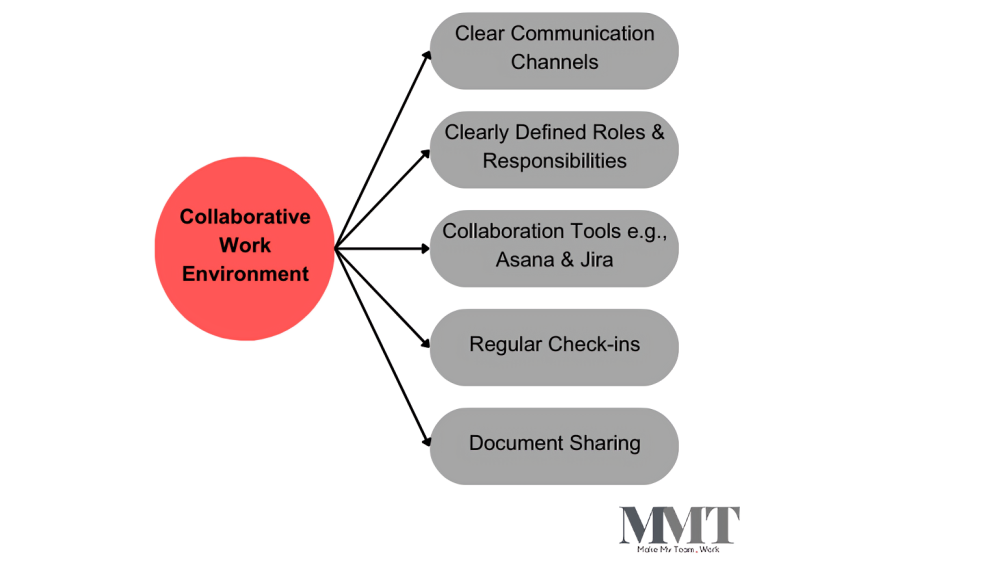
Clear and effective communication becomes a crucial component in ensuring a smooth and efficient workflow. The following are ways to set up a collaborative work environment when working with an offshore team:
- Establishing clear communication channels: Create defined, transparent, and effective communication methods within the team, such as emails, video conferencing, WhatsApp groups, etc.
- Clearly defining roles, responsibilities, and expectations: Ensure everyone understands what is expected of them and how their input contributes to achieving project goals.
- Leveraging collaboration tools: Use project management tools such as Asana, Jira, Trello, and Monday.com to manage and track tasks, deadlines, deliverables, and dependencies.
- Regular check-ins: Set-up weekly or bi-weekly meetings to discuss the status of the project, address any obstacles and adjust plans as needed.
- Document sharing: Create a shared space, such as Google Docs or Confluence Wiki, where team members can document matters related to the project (e.g., technical specifications, troubleshooting guidelines, and meeting notes) to ensure information is accessible to everyone.
While implementing these strategies, treating your team with respect and appreciation is equally important. Encourage open dialogue so team members can feel comfortable sharing their input and concerns.
Depending on your capabilities, offer opportunities for skill development, knowledge sharing, and professional growth to make them feel valued and motivated–this enhances their dedication and commitment to your project.
How Can Offshore Teams Collaborate on Complex Projects?
Complex projects often involve larger scopes with multiple interconnected components, which demands a more structured and strategic approach. In addition to the collaboration strategies discussed in the previous segment, project managers should initiate the following:
- Breaking the project down into manageable tasks: To make it less daunting and prevent your team from being overwhelmed, break down the project into small modules, each with clear objectives and deliverables.
- Dependency mapping: Outline which modules and task deliverables depend on the completion of the other to ensure logical flow and proper sequencing of tasks.
- Agile Methodologies: A project management approach that uses Scrum or Kanban while integrating iterative development. The project is broken down into small iterations, each focusing on incrementally delivering parts of the product. After each iteration, the product is reviewed, and feedback is gathered; the next phase is executed, refining the product with each cycle. Agile emphasizes continuous improvement and collaboration.
Most complex projects require a cross-functional team composed of individuals with diverse areas of expertise, each focusing on different aspects of the project. Therefore, you can implement asynchronous collaboration, where team members communicate formal and informal matters –e.g., sharing knowledge, idea sharing, seeking clarification– on a shared platform.
How to Measure the Success of Offshore Team Collaboration?
Each team is unique, and as such, success varies depending on specific objectives and desired outcomes. That said, there are key metrics that can be used to assess whether your team is progressing effectively toward its goals. The following are the key performance indicators (KPIs) to measure the success of offshore team collaboration:
- Task completion rate: Determine the number of tasks the team is completing on time and the percentage of delays.
- Frequency of team interactions: How frequently do team members show up for regular check-ins? How many people miss meetings? How frequent are interactions on the asynchronous platform selected?
- Team retention rates: Establish whether you’re progressing with the team you started the project with. How often do team members leave mid-project? What is the reason?
- Percentage of budget spent vs. allocated: Evaluate whether the project is staying in line with the allocated budget. Also, examine whether the remaining funds are sufficient to sustain the project until completion.
- Stakeholder feedback ratings: Determine whether stakeholders, e.g., product owners, are satisfied with the project’s progress.
It is crucial to measure a team’s performance regularly to identify and address issues earlier before they escalate. By consistently tracking progress, monitoring KPIs, and assessing both individual and team contributions, you can gain valuable insights into how effectively the team is working and take corrective action to keep the project on track.
Conclusion
The manner in which your offshore team collaborates plays a significant role in the overall success of a project. Effective collaboration ensures that team members are well-aligned in their goals, responsibilities, and expectations, which fosters a cohesive and streamlined work environment.
A well-coordinated team maintains momentum throughout the development cycle, with minimal errors and unnecessary delays, ensuring the project is completed on time and meets the desired high-quality standards.
At MMT.work, we don’t just assemble your offshore team; we ensure they operate seamlessly and collaborate effectively. From team setup to assisting in project management, we guide every step to deliver results that exceed expectations. Let us manage the details so you can focus on growing your business.