


Success stories of female entrepreneurs in Australia are a testament to how far women have journeyed. They faced the dual challenge of overcoming gender biases while building businesses in a competitive market. Female entrepreneurs across various industries have long faced obstacles. Somtimes often required to work twice, thrice, or even ten times harder than their male counterparts to prove their worth and gain recognition.
Despite these systemic barriers, Australian women have made remarkable strides in recent years, with a surge of female entrepreneurs emerging to challenge traditional norms and break the glass ceiling.
The rise of Female Entrepreneurs in Australia highlights a transformative shift in Australia’s business landscape, with increased support for women in business and slowly changing cultural attitudes, paving the way for current and future generations.
Women like Melanie Perkins, co-founder of Canva, have created multi-billion dollar businesses in industries historically dominated by men. They are a testament to the power of innovation, perseverance, and risk-taking. Their success stories are not just about individual triumphs but represent a broader movement toward gender equality in the Australian entrepreneurial ecosystem.
What Does “Breaking the Glass Ceiling” Mean for Female Entrepreneurs?
Female entrepreneurs face visible and invisible barriers that limit their ability to access their full potential. The metaphorical glass ceiling often represents the societal, cultural, and institutional obstacles that hinder their advancement.
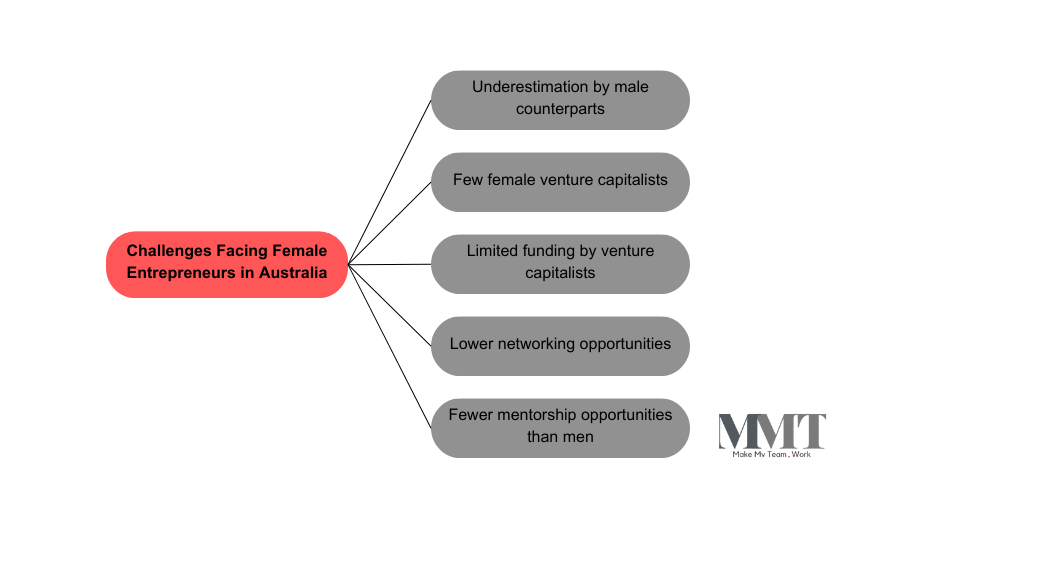
Gender bias and stereotypes are the main factors that create a ripple effect for female entrepreneurs, e.g., limited funding and lower mentorship opportunities. Breaking the glass ceiling means overcoming these challenges to achieve success and recognition in fields traditionally dominated by men. The following are challenges experienced by female entrepreneurs:
- Extreme Underestimation: Women’s capabilities are often underestimated, especially by their male counterparts–whether it’s their ability to effectively run a business, leadership skills, or take on challenging roles. Men are generally viewed as more capable and command respect more easily than women.
- Underrepresentation of female venture capitalists (VCs): Men dominate the VC domain. There is little information on the number of female VCs in Australia, but worldwide, they make up less than 15% of VCs). Studies show that male VCs are likely to fund male entrepreneurs as opposed to women. In a study conducted by Harvard, 70% of VCs preferred pitches from male entrepreneurs, even if they were similar to pitches from women. The decisions can either be conscious or subconscious due to gender bias.
- Underfunding: Startups founded by women receive less than 3% of all funding from VCs. When a business does not receive adequate funding, its chances of getting off the ground become limited. Therefore, female entrepreneurs face a challenge in growing their business ideas, some of which are highly innovative.
- Closed Networks: Investment decisions in venture capital often stem from personal connections and networks. The male-dominated industry can lead to a “boys’ club” dynamic, where male entrepreneurs have greater access to funding, support, and opportunities than female entrepreneurs.
- Limited access to mentorship: The stereotypical perception that men are better entrepreneurs and fewer women in powerful positions (such as VCs) means fewer role models for aspiring female entrepreneurs. Mentorship is important for guidance and support in entrepreneurship, especially during the infant stages of a startup. It is harder for women to find people to walk the entrepreneurial journey with them, offer practical and relatable advice, and help them gain a deeper understanding of their field.
Despite the growing opportunities available to female entrepreneurs, the playing field remains significantly uneven—current conditions are still more favourable for men. Deep-rooted stereotypes continue to shape the entrepreneurial landscape and make it more challenging for women to access the same opportunities and recognition as their male counterparts.
Key Statistics on Female Entrepreneurship in Australia
Understanding the current position of women in business in Australia is crucial for assessing the progress and challenges they face in the entrepreneurial landscape. Below is an overview of key statistics of female entrepreneurship in Australia:
- 27% of startup founders in Australia were women, a significant increase from 14% in 2014.
- In 2024, approximately 42% of small business owners in Australia are women, an increase from 33% in 2021.
- In 2022, just 3% of VC funding went to startups founded by women in Australia. Subsequently, less than 10% of the companies with at least one woman on the co-founding team received funding.
- More than 60% of female entrepreneurs say that gender stereotypes affect their business growth.
- In a survey, 70% of female entrepreneurs stated they knew of a female entrepreneur as children. This shows the role of mentors and role models in shaping entrepreneurs from a young age.
These statistics indicate that Female Entrepreneurs in Australia have seen notable growth in recent years. Despite these advancements, a significant gender gap still exists, indicating that we still have a long way to go in ensuring women in business receive equal opportunities.
Inspirational Success Stories of Australian Female Entrepreneurs: Melanie Perkins-Canva (Women in Tech)
Perkins is the co-founder of Canva, one of the most popular graphic design tools today. She studied at the University of Western Australia as a Communications, Psychology, and Commerce major while tutoring graphic design students privately.
She noticed that her students struggled to learn complex design programs, and this is where her idea to create a simple one was born. Due to limited resources and no technical expertise, she and her partner and co-founder, Cliff Obrecht, started a concept that catered to one category–high school yearbooks. This led to the creation of Fusion Books in 2007. They offered the software for free to schools.
Greg Mitchell, the founder of another company, helped them raise AUD 50,000 from friends, family, and a loan. With the help of his company, InDepth, they built their first minimum viable product (MVP). 16 schools signed up during the first year to design their yearbooks, and by the end of the third year, more than 100 schools had signed up to use the software.
She still had the vision to create a design tool that catered to people with limited knowledge of using design tools. She continued seeking out investors from Silicon Valley and met Bill Tai at a conference in Perth.
Tai introduced her to other investors, but she was rejected numerous times. Tai finally decided to back her up with the condition that she would find a good tech team. He also introduced her to Lars Rasmussen, the co-founder of Google Maps, and he was intrigued by her idea.
He agreed to be her tech advisor but rejected many applicants who wanted to join her tech team. She later met Dave Hearnden and Cameron Adams. They agreed to be the CTO and co-founder, respectively.
Within a year, Canva’s website launched, and users were allowed to test the product for free. The platform was finally launched in 201,3, and Perkins became the CEO and co-founder at 26 years old. In 2024, Canva is valued at $40 billion (AUD 62.59) with an annual revenue of over $ 2.3 billion (AUD 3.1 billion)
Lessons Learned from Female Entrepreneurs: Overcoming the Glass Ceiling
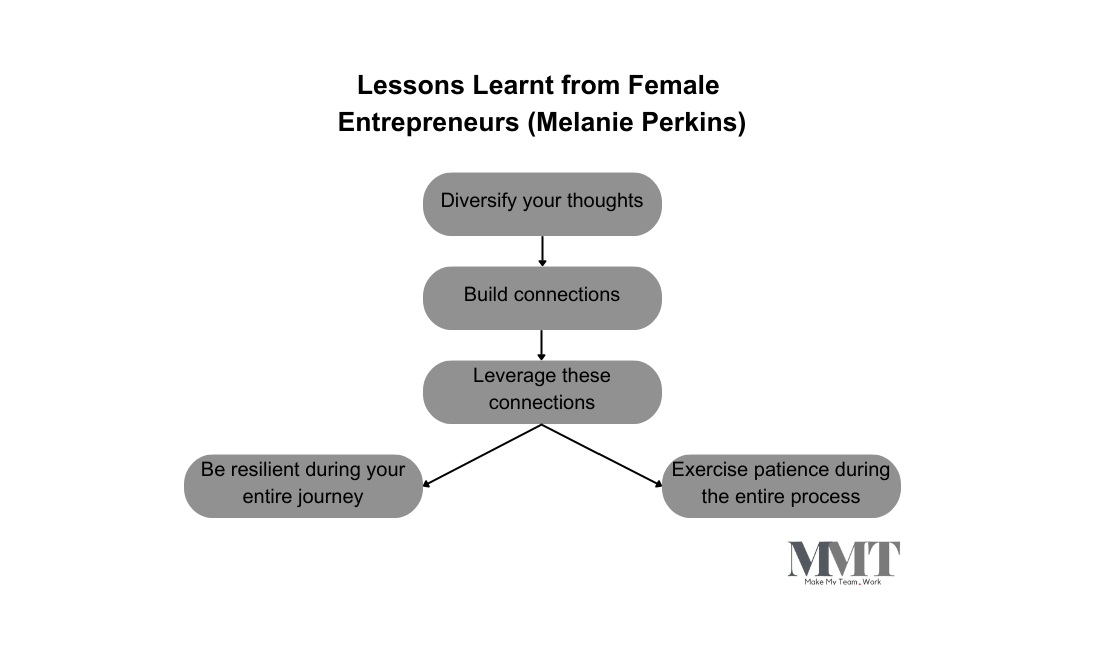
Breaking the glass ceiling can be challenging for Female Entrepreneurs in Australia. Women often face different and unique challenges once they venture into business. However, the journey and success of various women, including the founder of Canva, show that breaking norms is possible. The following are some lessons we can learn from Melanie Perkins’s journey:
- Diversify your thoughts: Perkins and her initial co-founder knew they lacked the resources and technical knowledge, so they started with a product that catered to one niche instead of her initial idea. They used this concept to sell the vision to potential investors, and Canva was later formed from it.
- Build Connections: Perkins attended a conference in Perth and met Tai, who changed the trajectory of her life. While he was not initially on board, he backed her up later on after she received numerous connections.
- Leverage your network: Perkins built more connections by leveraging her network with Tai. These connections helped her get a tech team and build a viable product with the help of a tech advisor.
- Resilience: Perkins continued to pitch her idea to numerous venture capitalists despite facing numerous rejections. Had she not continued, the idea of Canva would still be an idea today.
- Patience: Many people rejected Perkins’ idea until she met Rasmussen, more than five years after she first conceived her idea. He saw the potential in her vision and helped her find a tech team.
The journey of female entrepreneurship is not easy. However, it is worth it with perseverance and a valuable product or service. Just like Melanie Perkins, many female entrepreneurs face significant challenges along the way. Their success stories are great examples of how determination, hard work, and belief in your vision can ultimately lead to a successful business venture.
The Role of Support Systems in Female Entrepreneurship
We cannot understate the role support systems play in building female entrepreneurs. A solid support network can make all the difference in overcoming challenges and achieving success.
They come from friends, family, founders, and other experts in your network. A strong support system can help female entrepreneurs in the following ways:
- Mentorship: Mentors guide strategies, and business do’s and don’ts in specific niches. For example, Tai knew Perkins needed a special tech team to build her product. Since he had been a Silicon venture capitalist for long, he understood that the tech could build or break her vision.
- Emotional Support: The entrepreneurial journey is challenging for many business owners and even more complicated for women. Due to these challenges, it is common for people to feel like giving up along the way. Mentors, especially those with similar experiences, encourage people not to give up by sharing their stories of perseverance.
- Funding: Due to biases in the investment community, women often face greater challenges accessing funding than their male counterparts. Support systems that include female investors, angel networks, or crowdfunding platforms can ease the gender gap in business financing.
- Networking: Networking events, both formal and informal, help entrepreneurs meet potential clients, investors, and collaborators. Some people in your network can also connect you to potential investors.
- Access to female-centred online communities: Digital communities and social media groups provide a platform for female entrepreneurs to connect, share resources, and access information. They can also help women connect with potential co-founders.
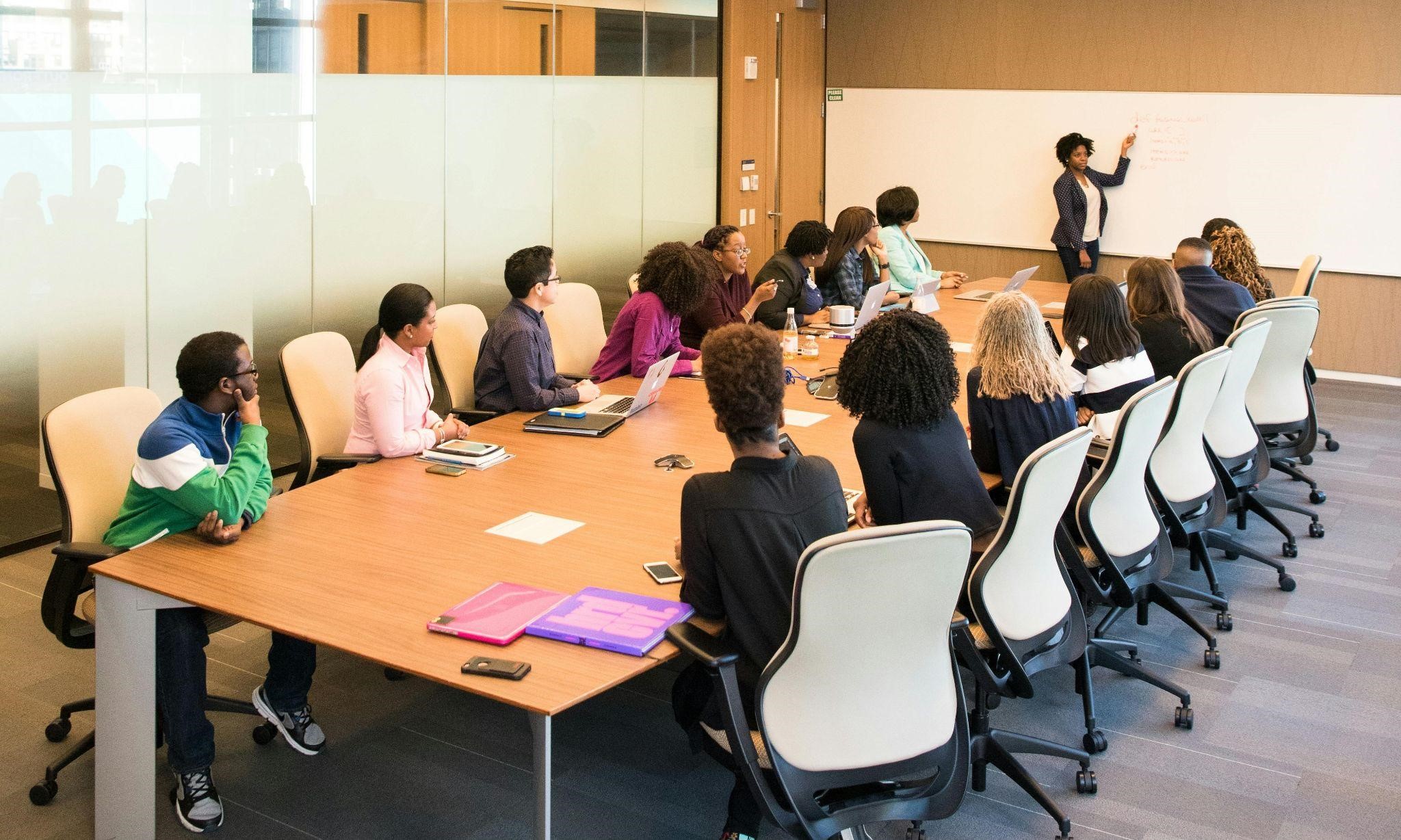
Image by Christina Morillo via Pexels
Plenty of resources are designed to help female entrepreneurs struggling to access the right support networks. In Australia, many programs focus on providing the support, mentorship, and guidance female entrepreneurs need to succeed.
For example, the Future Female Entrepreneurs Program (FFEP), founded by the government, is an innovative program free for girls and women interested in or already in business.
Conclusion: The Path Forward for Female Entrepreneurs in Australia
While it may feel like the odds are stacked against female entrepreneurs, that’s not the whole picture. Many women have success stories and have made their entrepreneurial mark in Australia. The journey is filled with hurdles, but building a successful business is possible. The rise in female business owners in Australia over the past few years proves it can be done.
For women in business, it’s crucial to tap into the networks and opportunities at your disposal. They can make the journey easier and help keep you motivated. Remember, one failure doesn’t mean you’re done. Sometimes, trying a different approach after something doesn’t work out can lead to success. Persistence, creativity, and resilience are key; with the right mindset, one of your ideas will eventually take off.